

A bowl of almonds sits on the counter and you walk past it, exactly as you have for years. Diverticulitis and Nuts got tangled together in kitchen folklore decades ago, and the warning still travels faster than the evidence. The fear feels sensible, yet it rests on an idea that gastroenterologists quietly abandoned years ago.
Nobody enjoys hearing that a rule they followed carefully for years turned out to be wrong. However, this correction opens the pantry again, and it hands back fiber your colon genuinely wants. Here is what changed in the guidance, and what safely belongs on your plate tonight.
Key Takeaways
- Large studies found no link between diverticulitis and nuts, seeds or popcorn.
- The old restriction came from a mid-century theory, never from research on patients.
- During an active flare your team still limits fiber, therefore nuts wait their turn.
- In remission nuts deliver fiber, magnesium and healthy fats that your colon can use.
- Smooth nut butters make a gentler reintroduction than a handful of whole almonds.
- Chewing slowly and drinking steadily matter more than banning any single food.
Where the Nut Ban Actually Started
The story of diverticulitis and nuts begins in the middle of the last century, inside a plausible picture. Doctors imagined a hard fragment lodging inside a diverticulum, much the way a seed settles into a pocket. The image sounded mechanical and obvious, therefore it spread through clinics fast and stayed for fifty years.
Nobody had tested the idea properly, because nobody thought a theory that neat required any testing. Patients inherited the rule from their parents and have repeated it at family tables ever since. Meanwhile specialists kept watching their patients for the trapped fragments, and the proof simply never arrived.
Low-residue eating did help people during an attack, which gave the lifelong ban a borrowed credibility. Doctors then stretched a sensible short-term measure into a permanent prohibition without any evidence behind it. Our guide to what causes diverticulitis flare-ups walks through the triggers that researchers have actually documented.
What the Research Says About Diverticulitis and Nuts
A large prospective study in JAMA followed more than 47,000 men across eighteen years of ordinary eating. Researchers tracked nut, corn and popcorn intake against every diverticular complication that appeared during those eighteen years. They found no association whatsoever, and the published analysis even showed slightly lower risk among popcorn eaters.
That single result would mean little on its own, although nothing published since has contradicted its findings. Guidance shifted accordingly, and the American Gastroenterological Association dropped the restriction from its recommendations. The Mayo Clinic now lists the nut and seed rule among the advice that has changed.
Why the Old Rule Outlived the Evidence
Printed handouts and family memory both survive far longer in a kitchen than any journal article does. A surgeon told your aunt back in 1994, therefore the ban reached you with the full weight of personal testimony. Correcting that takes more than one paper, since trust travels through people rather than through footnotes.
Many patients also feel safer holding a list of forbidden foods than living with a nuanced answer. Restriction offers the comforting illusion of control, while inflammation quietly follows its own logic underneath. Letting go of the list feels risky at first, yet it usually improves the diet rather than harming it.
Diverticulitis and Nuts During an Active Flare
None of this means you should crunch a handful of almonds while your abdomen throbs. During an attack the colon wall stays inflamed and tender, therefore care teams pull fiber down to almost nothing. Your own doctor decides the timing of every phase, and that decision belongs entirely to them.
Most flare plans open with clear liquids and then move toward low-residue foods as the pain eases. White rice, applesauce, cooked eggs and plain broth all sit comfortably inside that narrow window. Whole grains, raw vegetables, seeds and nuts stay off the plate meanwhile, because bulk asks too much of irritated tissue.
Our diverticulitis stage 1 diet guide maps that transition step by step, from broth to soft food. Keeping the phase short matters as well, since a long stretch of low fiber creates its own problems. Your dietitian will set both the foods and the schedule that fit your own recovery best.
Diverticulitis and Nuts After the Flare Settles
Once the symptoms fade, the restriction lifts and fiber returns gradually rather than all at once. Every colon heals on its own schedule, so the pace comes from your care team instead of a chart. Rushing a reintroduction usually produces gas and cramping that frighten people straight back into avoidance.
Begin with smooth almond or cashew butter spread thinly on toast, because someone has already done the grinding. Finely chopped walnuts stirred into warm oatmeal come next, and whole nuts arrive last of all. Our piece on living with diverticular disease explains why steady fiber protects you between episodes.
What Nuts Bring to a Diverticulitis Diet
One ounce of almonds carries roughly 3.5 grams of fiber, which counts as real progress toward any daily target. Walnuts add omega-3 fats that support the anti-inflammatory side of your everyday eating pattern. Cashews and pumpkin seeds contribute magnesium and zinc, two minerals that your gut lining draws on constantly.
Fiber type matters just as much as total fiber quantity inside a sensitive colon:
- Soluble fiber softens stool and slows digestion, easing pressure on the colon wall.
- Insoluble fiber adds bulk and keeps everything moving at a steadier pace.
- Healthy fats carry fat-soluble vitamins and make a small portion feel satisfying.
- Plant protein rounds out a meatless lunch without heavy or hard-to-chew textures.
Nuts deliver both kinds of fiber, therefore they sit well beside oats, beans and cooked vegetables. Our guide to soluble vs insoluble fiber explains how the two work together. Variety beats volume here, since a mixed handful covers more ground than a jar of one nut.
Diverticulitis and Nuts: Flare Versus Remission
The table below sets the two phases side by side, so the line stays clear on days when symptoms blur it.
| Food | During an active flare | In remission |
|---|---|---|
| Whole almonds or walnuts | Off the plate | A small handful, chewed thoroughly |
| Smooth nut butter | Ask your care team | On toast or stirred into oatmeal |
| Popcorn | Off the plate | Fine for most people |
| Sesame and poppy seeds | Off the plate | No evidence of harm |
| Raw vegetables and salads | Off the plate | Welcome, reintroduced gradually |
| White rice and applesauce | Core of the plan | Still useful, no longer the whole menu |
| Cooked eggs and clear broth | Gentle and encouraged | Everyday staples |
Diverticulitis and Nuts in Your Kitchen
Preparation changes how a nut behaves in your gut far more than the variety of nut ever does. Chew slowly until the pieces feel like a paste, because your teeth do work that your colon cannot. Sitting down to eat, rather than driving or scrolling, makes that far easier than any rule.
Toast the nuts lightly and chop them before they land on a salad or in a yogurt bowl. Soaking almonds overnight softens them noticeably, meanwhile the skins slip away and digest more easily. Keep portions near one ounce at first, since fat and fiber together can feel surprisingly heavy.
Storage protects both flavor and your budget, since rancid nuts taste bitter enough to end a new habit. Keep opened bags in the freezer, then portion a week of snacks into small jars on Sunday. A diverticulitis diet plan built on steady habits beats an ambitious week followed by retreat.
Water carries fiber through the system, therefore drinking well matters more the moment nuts return. Sip across the day instead of downing two glasses at dinner, because your colon works on a slower clock. Our high fiber foods guide lists gentler starting points if whole nuts still worry you.
The Other Foods Wrongly Blacklisted
Sesame and poppy seeds fell under the very same suspicion, and they carry an equally clean record. Popcorn sat on every banned list as well, although the JAMA data pointed firmly in the other direction. Our article on popcorn with diverticulosis examines hulls closely and explains what they really do.
Tomatoes and strawberries drew exactly the same blame, purely because of the tiny seeds they carry. Those tiny seeds pass through the colon without lodging anywhere, so a summer salad poses no threat during remission. The logic that cleared diverticulitis and nuts clears these foods along with them.
Individual tolerance still varies widely, and your own record of symptoms outranks any general list online. Some people find that a particular food reliably brings bloating, whether or not research condemns it. Keep a simple food diary for a month, then bring the pattern you find to your next appointment.
Habits That Protect You Between Episodes
Fermented foods earn a place beside the fiber, because they feed the gut bacteria doing all the quiet work. Plain yogurt, kefir and fermented vegetables all support a more balanced gut environment over time. Choose the unsweetened versions where you can, since added sugar undercuts much of what you gain.
Some people with a persistently sensitive gut do better on a gentler pattern for a while. A low FODMAP plan, for example, narrows the field of foods temporarily. Nuts still fit comfortably inside it, although the portions and the varieties both change somewhat.
Movement keeps the colon in rhythm, and our exercise and diverticulitis guide covers safe options for shaky weeks. Long-term patterns shape outcomes far more than any single meal does, which living with diverticular disease explores in detail.
Frequently Asked Questions
Can I eat nuts if I have diverticulosis?
Most people can, since current guidance no longer restricts them once symptoms have settled completely. Your gastroenterologist knows your history, therefore run any change past them before you fill the pantry.
Do nuts really get stuck in diverticula?
Researchers looked for exactly that outcome across eighteen years and never found it. Fragments travel through the colon like any other food particle, so the mechanism people pictured does not hold up.
What about nuts during an active flare?
Nuts wait until the inflammation settles, because irritated tissue handles low-residue food much better. Your care team will tell you when fiber can safely come back onto the plate again.
Which nuts are easiest to start with again?
Smooth nut butters come first, followed by finely chopped walnuts or almonds stirred into oatmeal. Whole nuts arrive last of all, and unhurried chewing makes them considerably more comfortable.
Bringing Diverticulitis and Nuts Back Together
The old ban survived for decades on plausibility alone, until the accumulated evidence finally dismantled it. Fiber, magnesium and healthy fats all belong in a diet that protects your colon across years. Flares remain the one clear exception, and during an attack your care team sets every rule.
Open the jar of almond butter this week and see how a thin layer on toast sits. Small steps rebuild confidence much faster than a dramatic return to handfuls of whole nuts.
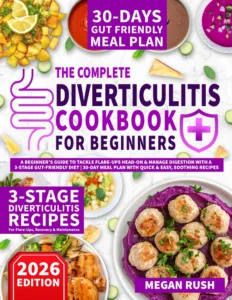
Check out the author’s book here: Diverticulitis Cookbook.

Leave a Reply