
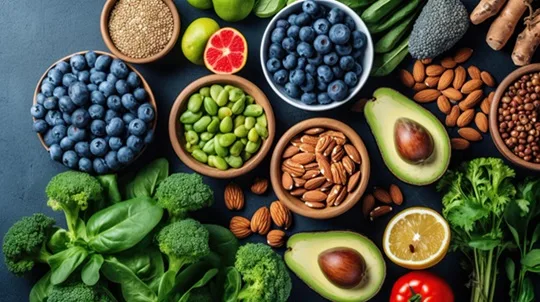
The word “superfood” gets tossed around so loosely that it can sound like pure marketing. When you live with diabetes, however, a few everyday foods truly earn the title. They steady blood sugar instead of spiking it, and none of them are exotic or expensive. This guide explains the best superfoods for diabetes in plain kitchen language, so you can stop thinking only about what to avoid.
I know how tiring it feels to read another list of forbidden foods after a diagnosis. Therefore, this article does the opposite and hands you ten ingredients you can shop for tonight. You will also find a swap table, a plate template, and answers to the questions readers send me most often.
Key Takeaways
- Superfoods for diabetes share four traits: a low glycemic index, plenty of fiber, dense nutrients, and healthy fats.
- Fiber, protein, and fat slow how fast glucose reaches your blood, so pairing matters as much as choosing.
- Leafy greens, fatty fish, berries, nuts, avocados, chia seeds, legumes, plain Greek yogurt, broccoli, and cinnamon make the list.
- Portions still count, because nuts and avocados are calorie-dense even though they barely move blood sugar.
- No food replaces your medication or your care team’s plan; these picks work alongside it.
What Makes the Best Superfoods for Diabetes Different?
Before the list, it helps to know what qualifies a food, because these ten did not land here by accident. Each one slows the arrival of sugar into your blood, and most also protect your heart. That second part matters, since diabetes raises your cardiovascular risk on its own.
- Low glycemic index (GI): these foods release sugar slowly, so your glucose climbs gently after a meal.
- High in fiber: soluble and insoluble fiber slow absorption, keep you full longer, and feed your gut bacteria.
- Rich in nutrients: vitamins, minerals, and antioxidants fight inflammation and protect your cells from damage.
- Healthy fats: monounsaturated fats and omega-3s support your heart and slow the digestion of carbohydrate on the same plate.
Fiber shows up in almost every food below, which is no coincidence. If you want a deeper list, my roundup of fiber-rich foods for a diabetes diet walks through twenty options. Similarly, the guide to diabetes and healthy fats explains why fat on the plate is a friend.
Why Fiber, Fat, and Protein Steady Your Blood Sugar
Here is the physiology in plain words: when you eat a carbohydrate on its own, your stomach empties quickly and the glucose rushes into your bloodstream. When fiber, fat, or protein sit in the same meal, however, the stomach empties more slowly. The sugar then trickles out over an hour or two instead of arriving all at once.
The American Diabetes Association explains that fiber is a carbohydrate your body cannot digest. Because of that, it does not raise blood sugar the way starch and sugar do. A slice of toast with avocado therefore behaves differently from the same slice with jam.
The 10 Best Superfoods for Diabetes Control
Here are the ten foods I reach for most, each with a reason and a tip for tonight. Several of them come out of a can or a freezer bag.
1. Leafy Greens (Spinach, Kale, Collards)
Leafy greens are the definition of nutrient-dense, because they carry almost no calories or digestible carbohydrate, yet they deliver vitamin C, magnesium, and polyphenols. As a result, they barely register on your blood sugar while filling half a plate with color.
Easy tip: do not relegate greens to a side salad; wilt a handful of spinach into your morning eggs, blend kale into a smoothie, or stir collards into soups near the end.
2. Fatty Fish (Salmon, Sardines, Mackerel)
People with diabetes carry a higher risk of heart disease, so heart-protective foods matter twice as much. Fatty fish are the richest source of the omega-3 fats DHA and EPA, which help lower triglycerides and calm inflammation. The American Heart Association recommends two servings of fish a week, ideally the oily kinds.
Easy tip: a salmon fillet baked at 400°F for twelve minutes with lemon and dill is a complete dinner. Canned sardines cost a fraction of fresh fish, and they turn a green salad into a real meal.
3. Berries (Blueberries, Strawberries, Raspberries)
Fruit contains sugar, yet berries remain one of the best choices for people with diabetes. They pack fiber alongside anthocyanins, the antioxidants behind their deep color, and that pairing slows the glucose response. Raspberries in particular deliver a lot of fiber for very little sugar.
Easy tip: top a bowl of plain Greek yogurt or oatmeal with a cup of mixed berries for breakfast. Frozen berries work just as well, so buy them in bulk and let a handful thaw overnight in the yogurt.
4. Nuts (Almonds, Walnuts)
Nuts bring healthy fats, fiber, and protein in one crunchy package, and that trio blunts blood sugar spikes. Almonds are rich in magnesium, while walnuts offer a plant-based source of omega-3 fats. However, nuts are calorie-dense, so the portion matters more here than with any other food on this list.
Easy tip: a small handful, about ¼ cup, makes a satisfying afternoon snack. Portion it into small bags on Sunday, because eating from the big jar rarely ends at a quarter cup.
5. Avocados
Avocados combine heart-healthy monounsaturated fat with a surprising amount of fiber. A single fruit covers a meaningful share of your daily fiber needs, and the fat slows the digestion of any carbohydrate beside it. For example, avocado on whole-grain toast produces a gentler curve than butter on the same slice.
Easy tip: add half an avocado to your lunch salad, or mash it onto toast with a pinch of salt. Squeeze lemon over the cut half before storing it, so it stays green until tomorrow.
6. Chia Seeds
Do not let their size fool you, because chia seeds are among the most fiber-dense foods you can buy. They are especially rich in viscous fiber, which absorbs water and forms a gel in your stomach. That gel slows digestion dramatically, so sugar from the rest of your meal enters your blood at a crawl.
Easy tip: make a simple pudding by stirring 2-3 tablespoons of chia seeds into a cup of unsweetened almond milk. Let it sit for a few hours or overnight, then add cinnamon and a few berries.
7. Beans and Lentils
As a category, beans and lentils are champions for diabetes management, because they pair plant protein with fiber. Their glycemic index is very low, so a bowl of lentils fills you up without the crash that follows white rice. They are also the cheapest protein in the store.
Easy tip: swap half the ground meat in your chili for black beans, or cook a pot of lentil soup on Sunday. Canned beans work fine; rinse them well to wash off most of the sodium.
8. Greek Yogurt (Plain)
Plain, unsweetened Greek yogurt brings protein and live probiotics together in one cup. Those helpful bacteria support gut health, and researchers are studying whether they also play a role in insulin sensitivity. Meanwhile, the protein keeps you full and slows the sugar from any fruit you stir in.
Easy tip: use plain Greek yogurt as a breakfast base, a sour cream stand-in on tacos, or a thickener in smoothies. Read the label, because flavored versions can carry as much sugar as a dessert.
9. Cruciferous Vegetables (Broccoli, Cauliflower)
This family of vegetables is high in fiber and low in digestible carbohydrate, so it fills a plate without affecting glucose. Broccoli also contains sulforaphane, a compound with anti-inflammatory effects that may help protect against cellular damage. Cauliflower, meanwhile, is the most useful stand-in for starchy sides.
Easy tip: roast broccoli florets with garlic and olive oil at 425°F until the edges crisp, about twenty minutes. Use riced cauliflower in place of white rice, and see my best vegetables for diabetes control for more ideas.
10. Cinnamon
Cinnamon is a spice rather than a food, yet it has shown promising potential in diabetes research. Some studies suggest it can help lower blood sugar and improve insulin sensitivity, although the evidence remains mixed. Its real kitchen value, however, is that it adds warmth and sweetness without a gram of sugar.
Easy tip: sprinkle cinnamon into your coffee, over oatmeal, or into plain yogurt. Because it reads as sweet on the tongue, skipping the sugar becomes much easier.
Superfood Swaps at a Glance
The table below shows what changes when you trade a common food for its superfood cousin. Nobody is banning the first column; the second one simply changes the way a meal lands.
| Common choice | Superfood swap | What changes on your plate |
|---|---|---|
| White rice | Riced cauliflower | Far fewer digestible carbs, same volume, takes on any sauce |
| Butter on toast | Mashed avocado | Fiber plus monounsaturated fat that slows the bread’s sugar |
| Sour cream | Plain Greek yogurt | More protein, probiotics, and a tangy flavor that works on tacos |
| Chips as a snack | ¼ cup almonds or walnuts | Fat, fiber, and protein that keep you full through the afternoon |
| Sweetened fruit yogurt | Plain yogurt with berries | Real fiber and antioxidants without the added sugar |
| Ground beef chili | Half beef, half black beans | Extra fiber, lower cost, and a slower glucose rise |
Creating a Super-Powered Diabetes Plate
Putting these foods to work is easiest with the plate method, a visual guide that needs no scale. The NIDDK describes it as half non-starchy vegetables, a quarter protein, and a quarter carbohydrate foods. For a week of meals built this way, my 7-day diabetic meal plan does the planning for you.
- Fill half your plate with non-starchy vegetables such as leafy greens or roasted broccoli.
- Fill one quarter with lean protein such as salmon, sardines, or lentils.
- Fill the last quarter with smart carbohydrates such as berries or beans.
- Add a healthy fat such as half an avocado or a sprinkle of nuts.
Portion sizes still matter, especially for the fats, so measure the nuts and avocado until your eye learns the amount. Keeping these foods stocked is easier with a low GI shopping list pinned to the fridge. When a sweet craving hits, my diabetic dessert recipes lean on berries, cinnamon, and yogurt from this very list.
Common Mistakes When Adding Superfoods
The most frequent mistake I see is adding a superfood on top of a meal instead of swapping it in. Walnuts sprinkled over sugary granola still make a bowl of sugary granola, only with more calories. Instead, let the superfood replace the ingredient that caused the spike.
The second mistake is trusting the front of the box. “Superfood” smoothies and yogurt cups often hide more added sugar than a candy bar, so read the ingredient list. Finally, one serving will not move your numbers; the effect comes from what fills your plate most days.
Frequently Asked Questions
Can superfoods cure diabetes?
No, and nobody honest will tell you otherwise, because these foods help steady blood sugar and protect your heart, but they work alongside your medication and your care team’s plan.
How much fruit can I eat if I have diabetes?
That depends on your plan and your numbers, although berries are the gentlest choice because of their fiber, and yogurt slows the sugar further. However, your dietitian sets the amount that fits you.
Are nuts fattening for people with diabetes?
Nuts are calorie-dense, yet they barely affect blood sugar. A measured ¼ cup makes a filling snack, so portion them ahead of time rather than eating from the jar.
Does cinnamon really lower blood sugar?
The research is promising but mixed, so treat cinnamon as a flavor tool rather than a treatment; its strength is making oatmeal and coffee taste sweet without sugar.
Putting the Best Superfoods for Diabetes on Your Plate
You do not need to overhaul your kitchen this week. Pick two foods from this list, swap them into meals you already cook, and pay attention to how you feel afterward. Over time, the best superfoods for diabetes show up as steadier afternoons, fewer cravings, and meals you look forward to.
Eating well with diabetes is a long game, and my guide to managing diabetes with diet covers the flavor side. You deserve to enjoy your food, and these ten ingredients prove that rules and good eating share a plate.
Check out the author’s book here: Diabetic Air Fryer Cookbook.


Leave a Reply