
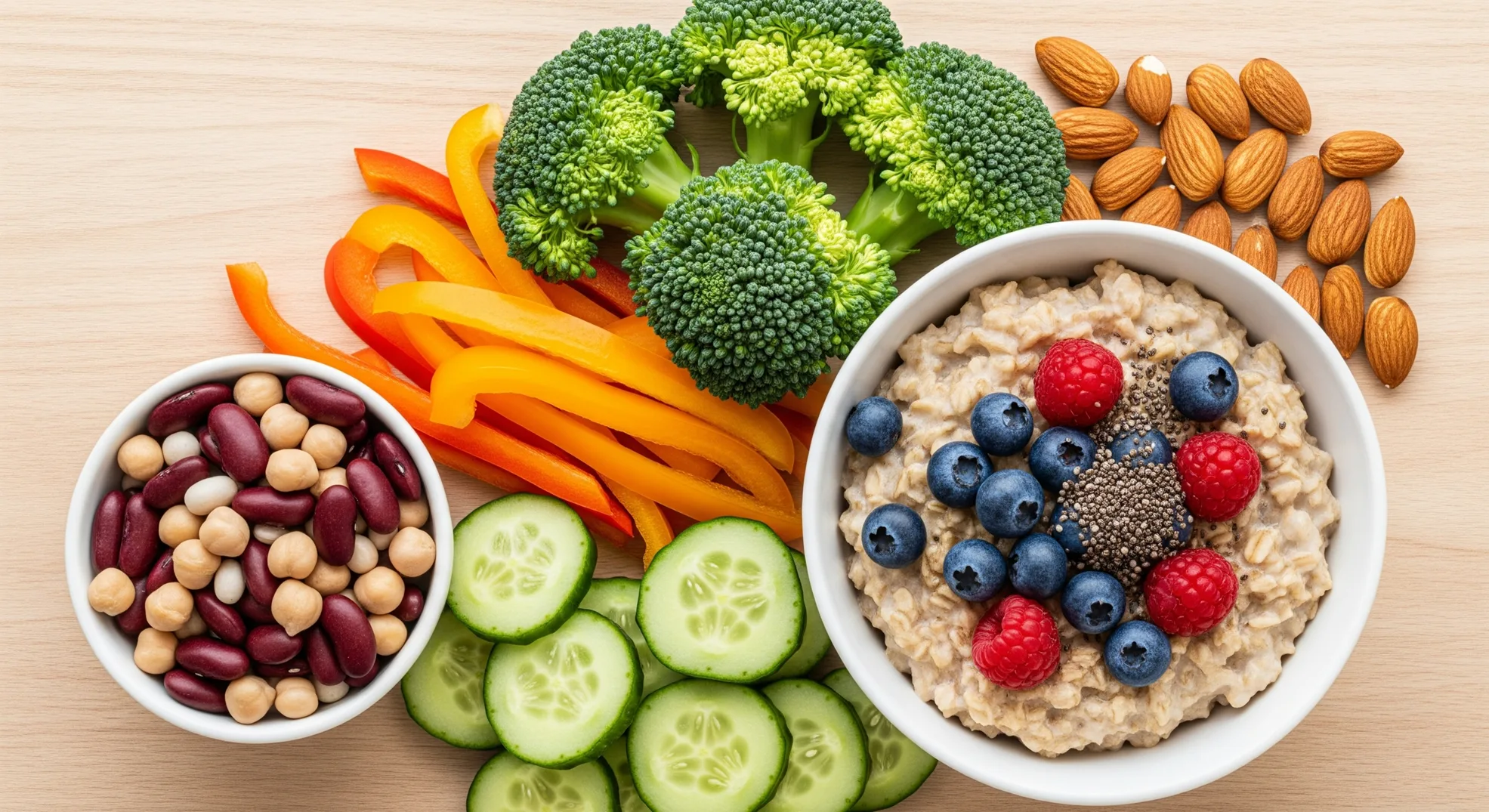
Living with type 2 diabetes can feel like every meal is a test you did not study for. You count carbs, you watch the clock, and you still wonder why lunch sent your numbers climbing. Here is the good news from my kitchen: fiber-rich foods are the one thing you get to add rather than take away. They slow the sugar rush, they keep you full, and they taste like real food instead of a compromise.
This list comes from my stove, not from a textbook or a clinic. Below you will find the science in plain words and twenty foods worth a place in your cart. Then come the habits that make them easy to eat every day. Your care team sets your carb targets; this guide helps you hit them with dinners you look forward to.
Key Takeaways
- Fiber is the part of a plant your body cannot digest, so it slows how fast sugar reaches your blood.
- Soluble fiber forms a gel that buffers glucose spikes, while insoluble fiber keeps digestion moving along.
- Legumes, non-starchy vegetables, whole fruit, intact grains, and seeds are the twenty foods worth stocking.
- Small swaps, such as brown rice for white or a whole pear for juice, add fiber without new recipes.
- Go slowly and drink water, because a sudden fiber jump brings gas and bloating for most people.
Why Fiber-Rich Foods Steady Your Blood Sugar
Fiber is a carbohydrate, yet your body treats it differently from sugar or starch. Digestive enzymes cannot break it apart, so it travels through your stomach and intestines mostly intact. Because it never turns into glucose, it does not raise your blood sugar the way bread or rice does.
That single quirk explains almost every benefit on this page. According to the American Diabetes Association, fiber is the one carbohydrate that your body does not turn into sugar. Choosing fiber-rich foods therefore helps you feel full while keeping glucose steadier. The right plan still comes from your care team, and my guide to managing diabetes with diet shows how balanced plates fit inside it.
Soluble and Insoluble Fiber at a Glance
Plants carry two kinds of fiber, and you want both on your plate for different reasons. Soluble fiber dissolves in water and turns into a soft gel that slows digestion and smooths out the glucose curve. Insoluble fiber does not dissolve; instead, it adds bulk and helps everything move along on schedule.
| Type | What it does in your body | Where you find it | Kitchen effect |
|---|---|---|---|
| Soluble | Forms a gel, slows sugar absorption, helps lower LDL cholesterol | Oats, beans, lentils, chia, apples, pears, avocado | Thickens, creams, holds moisture |
| Insoluble | Adds bulk, speeds transit, supports regularity | Wheat bran, farro, leafy greens, vegetable skins, nuts | Adds chew and crunch |
Most whole foods carry a mix, so you rarely need to pick one. However, the balance matters more if you also live with a gut condition. My post on soluble vs insoluble fiber walks through that difference in detail.
What Fiber Does Beyond the Glucose Meter
A steadier glucose curve is only the first win. Fiber-rich foods take longer to chew and longer to leave your stomach, so you feel satisfied with a smaller portion. That fullness quietly supports weight management, which many people with type 2 diabetes work on alongside their numbers.
Soluble fiber also binds some cholesterol in the gut and carries it out, which helps lower LDL, the “bad” kind. Heart health deserves attention when you have diabetes. The NIDDK lists whole grains, beans, fruits and vegetables among the foods that protect both your blood sugar and your heart.
The 20 Best Fiber-Rich Foods for a Diabetes Diet
I grouped these twenty foods by category, with a tip for each one that you can use tonight. Many also appear in my roundup of superfoods for diabetes control.
Legumes: The Fiber-Rich Foods That Do It All
Legumes bundle fiber, plant protein and slow-digesting carbs into one cheap package. A bowl of them behaves like a balanced meal on its own, and they freeze beautifully, so they anchor my weekly meal prep.
- Lentils: they cook in about twenty-five minutes with no soaking, and they carry both soluble fiber and protein. Simmer a big pot with carrots and cumin, then portion it out for the week.
- Chickpeas: their nutty flavor and firm bite hold up in salads, soups and stews. Roast a rinsed can with olive oil and smoked paprika for one of my favorite crunchy diabetic snacks.
- Black beans: a pantry staple that brings fiber, potassium and protein to tacos, chili and grain bowls.
- Kidney beans: they keep their shape through long cooking, so they are the classic choice for chili.
Non-Starchy Vegetables: Big Nutrition, Few Carbs
These vegetables give you the most fiber for the fewest carbs, so they can fill half the plate. Roasting at high heat brings out a sweetness that steaming never does.
- Broccoli: this cruciferous vegetable pairs fiber with vitamin C and sulforaphane, a plant compound with antioxidant effects. Roast the florets with olive oil, garlic and salt until the edges brown.
- Brussels sprouts: halve them, toss with oil, and air fry until the outer leaves crisp. Because they caramelize, even sprout skeptics usually come back for seconds.
- Avocado: a fruit that behaves like a vegetable, low in sugar and rich in monounsaturated fat and fiber. Mash half onto whole-grain toast or fold slices into scrambled eggs.
- Leafy greens (spinach and kale): they bring fiber, vitamins and minerals for almost no carbs. Wilt a big handful into soups, stews or pasta sauce during the last two minutes.
- Artichokes: one of the most fiber-dense vegetables you can buy, fresh or canned. Steam a whole one and dip the leaves in lemon-garlic butter, or scatter canned hearts over salads.
Fruits: Fiber-Rich Foods With Natural Sweetness
Fruit carries natural sugar, yet the fiber in whole fruit slows how quickly that sugar arrives. The trick is to eat the fruit, skin and all, rather than drink it.
- Berries (especially raspberries and blackberries): the fiber champions of the fruit aisle, relatively low in sugar and full of antioxidants. Spoon a cup over Greek yogurt, or fold them into my low-sugar treats for diabetics.
- Pears: a medium pear eaten with the skin delivers a meaningful amount of fiber. Slice one over a spinach salad with a few walnuts for a sweet-savory lunch.
- Apples: much of the insoluble fiber sits in the skin, so keep it on. Pair slices with a tablespoon of peanut or almond butter for a snack that holds you until dinner.
- Oranges: a whole orange gives you the fiber that a glass of juice leaves behind.
Whole Grains: Slow Carbs for Steady Energy
Whole grains keep the bran and germ that refining strips away, and that is where the fiber lives. They take longer to cook than white rice, so I make a double batch and freeze half.
- Oats: they contain beta-glucan, a soluble fiber known for its effect on blood sugar and cholesterol. Choose steel-cut or old-fashioned rolled oats, because instant packets often hide added sugar.
- Quinoa: technically a seed, though you cook it like a grain, with complete protein and plenty of fiber. Use it as the base for my quinoa and black bean salad, which doubles the fiber in one bowl.
- Barley: chewy and nutty, it shines in soups, stews and risotto-style dishes. Pearled barley cooks faster, while hulled barley keeps more of the bran.
- Farro: an ancient wheat with a satisfying chew and a good share of fiber and protein. Toss the cooked grains with roasted vegetables, lemon and herbs for a salad that keeps for days.
Nuts and Seeds: Small but Mighty
Nuts and seeds pack fiber, protein and healthy fats into a tiny volume, so a little goes a long way. Measure them, because the calories add up faster than the fiber does.
- Chia seeds: very high in soluble fiber, they swell into a gel when they meet liquid. Stir 2 tablespoons into ½ cup of almond milk, then let it sit overnight for a simple pudding.
- Flaxseeds: grind them first, because whole seeds pass through your system without giving up their fiber. Add a tablespoon of ground flaxseed to a smoothie or sprinkle it over yogurt.
- Almonds: a small handful makes a crunchy snack with fiber and protein together. Keep a portioned bag in your desk drawer so the vending machine never wins.
How to Add Fiber-Rich Foods Without Stomach Trouble
Fiber does its best work when you build up slowly and drink enough water. Ask your dietitian how much fiber fits your plan, since the right amount depends on your medications and your gut. Meanwhile, these habits make the change easier on your body.
- Start slow. If your plate is low in fiber today, add one new food every few days rather than five at once.
- Drink water with every meal. Soluble fiber needs liquid to form its gel, and without it you may feel blocked instead of satisfied.
- Read the label. Look for “Dietary Fiber” on the Nutrition Facts panel and compare two brands side by side.
- Swap, do not add. Replace white rice with brown rice or barley, and juice with the whole fruit.
- Cook once, eat three times. A pot of beans on Sunday turns into soup, a grain bowl and a taco filling by Wednesday.
My 7-day diabetic meal plan leans on these same foods, and it shows how a week of steady plates looks in practice.
Common Mistakes With Fiber-Rich Foods
The most common mistake I see is treating fiber as an all-or-nothing project. Someone reads a list like this one, eats beans at every meal for three days, and then quits because of the bloating.
Another mistake is trusting the front of the package. “Made with whole grains” can sit on a box full of refined flour and sugar, so the Nutrition Facts panel is the only label that counts. Finally, do not forget the skins: peeled apples and strained soups leave a good share of the fiber in the trash.
| Swap this | For this | What you gain |
|---|---|---|
| White rice | Brown rice, barley or quinoa | More fiber and a slower rise in glucose |
| Orange juice | A whole orange | The fiber that juicing removes |
| Instant flavored oatmeal | Steel-cut or rolled oats with berries | Beta-glucan and no added sugar |
| Croutons on a salad | Roasted chickpeas or a few almonds | Crunch plus fiber and protein |
| Peeled apple slices | Apple slices with the skin on | The insoluble fiber that lives in the peel |
Frequently Asked Questions
Which fiber-rich foods are best for lowering blood sugar?
Beans, lentils and oats work best for most people. Their soluble fiber slows glucose absorption, and their protein keeps you full, so one bowl covers two goals.
Can I eat fruit if I have diabetes?
Yes, whole fruit fits most diabetes plans. Berries, pears and apples with the skin deliver fiber along with their sugar, while juice strips that fiber out.
How do I add fiber without getting gas and bloating?
Go slowly and drink plenty of water. Add one new food every few days, cook beans thoroughly, and ask your dietitian about the amount that fits you.
Do fiber supplements work as well as fiber-rich foods?
Food gives you vitamins, minerals and protein that a powder does not. Supplements are a question for your doctor or dietitian, because they can interact with medications.
A Fuller Plate, a Steadier Day
Fiber-rich foods are the rare diabetes advice that adds to your plate instead of subtracting from it. Lentils, roasted sprouts, a pear with the skin on, a bowl of steel-cut oats: none of these taste like restriction. Pick two from the list this week, drink your water, and let your dietitian fine-tune the amounts.
You do not need a perfect plan; you need a full pantry and a few habits that stick. Start with the swaps you already like, such as brown rice or a handful of berries, and build from there. Every steady meal is a small win, and small wins turn a diagnosis into a way of cooking you can live with.
Check out the author’s book here: Diabetic Air Fryer Cookbook.
Leave a Reply