
When a doctor first says diabetes or prediabetes, a flood of numbers lands on your kitchen table. The glycemic index usually arrives first, and many of us react by crossing carrots, watermelon and bananas off the list. Understanding glycemic load vs glycemic index changes that picture, because it shows which foods can come back.
Many home cooks spend months with rigid lists of good and bad carbs, so dinner feels like a punishment. However, the index alone gives an incomplete picture of how food behaves in a real meal, with a real portion. The glycemic load fills that gap, and together the two numbers keep a diet flexible and tasty.
Key Takeaways
- The GI limit: it ranks carb speed but ignores the portion on your plate.
- The GL fix: a simple formula adds portion size to the picture.
- The watermelon paradox: a high-GI food can still carry a low load.
- Four meal softeners: fiber, fat, protein and acid slow the rise.
- A comparison table: seven everyday foods with both numbers side by side.
What the Glycemic Index Measures
Researchers developed the glycemic index in the 1980s to rank carbohydrate foods by how far they can raise blood glucose. The scale runs from 0 to 100, and pure glucose or white bread sets the baseline at 100. MedlinePlus explains how the glycemic index works and why it helps people with diabetes compare carbs.
The GI Scale at a Glance
- Low GI: 55 or less, such as lentils, beans, non-starchy vegetables and oats.
- Medium GI: 56 to 69, such as brown rice and whole wheat bread.
- High GI: 70 or higher, such as white potatoes, white rice and sugary cereals.
Your body digests high-GI foods quickly, so glucose rushes into the blood and often drops again soon after. In contrast, low-GI foods break down slowly and release a steady trickle of glucose that keeps your energy even.
Where the Index Falls Short
The index has one practical flaw, because labs measure it on a fixed portion of 50 grams of digestible carbohydrate. For white bread, that amount comes to about two slices, which a hungry person could easily eat at lunch. For carrots, however, you would need roughly a pound and a half, about 700 grams, in one sitting.
Nobody eats that many carrots with dinner, so the carrot score says little about a real half cup. Therefore, the index describes the quality of a carbohydrate, yet it says nothing about the quantity on your fork.
What the Glycemic Load Adds
Researchers at the Harvard School of Public Health introduced the glycemic load to fix exactly this portion problem. If the index tells you how fast a carbohydrate turns into sugar, the load tells you how much your serving delivers. As a result, it blends quality and quantity into one number that matches what you really put on the plate.
The Formula Behind Glycemic Load vs Glycemic Index
The math takes a single line: Glycemic Load = (Glycemic Index × grams of carbohydrate per serving) ÷ 100. Because the formula divides by 100, load numbers run much lower, so they follow their own scale.
- Low GL: 10 or less.
- Medium GL: 11 to 19.
- High GL: 20 or higher.
The American Diabetes Association points out that the total amount of carbohydrate in a meal shapes your glucose response more than any single score. Its guide to understanding carbs walks through starches, sugars and fiber in plain words. If you already count grams, our guide to carb counting made simple shows how they fit into a normal day.
The Watermelon Paradox
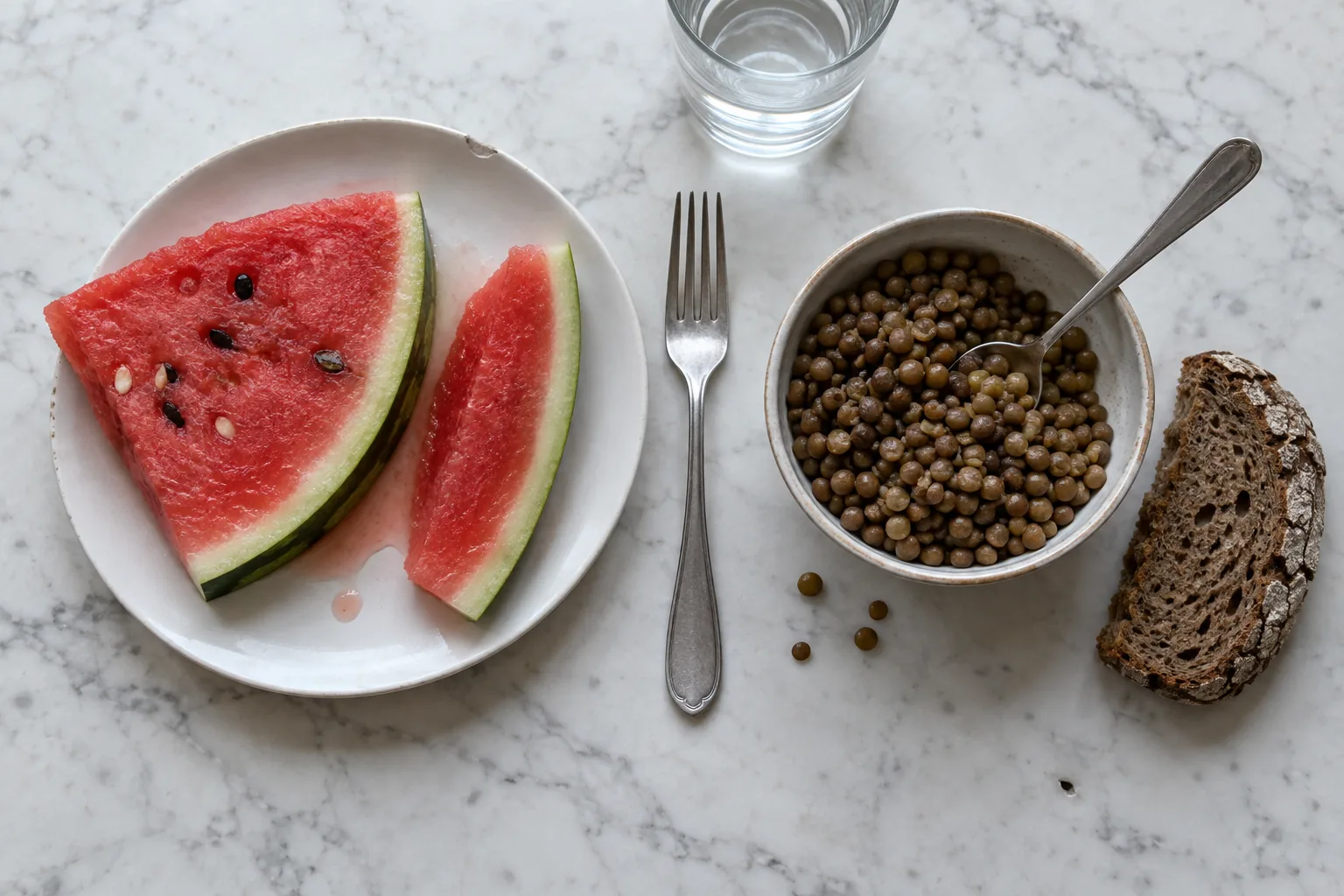
No example explains glycemic load vs glycemic index better than a cold slice of watermelon on a summer afternoon. On a GI chart, watermelon scores 72, which puts it firmly in the high group. Based on that number alone, many people with diabetes have skipped this fruit for years, even at family barbecues.
However, watermelon holds mostly water, as the name suggests, so the carbs sit diluted inside each bite. One cup of diced watermelon contains only about 11 grams of carbohydrate, and that small figure changes the math completely.
- (72 × 11) ÷ 100 = 7.9.
A load of 7.9 falls squarely in the low range, even though the index looked alarming. In other words, watermelon sugars digest fast, but a normal serving holds so few that the impact stays small. So you can put a cup back on your summer menu, ideally next to some protein at the same meal.
Comparing Everyday Foods Side by Side
The same logic works across your pantry, and a few familiar foods show how the verdict shifts with the portion.
Glycemic Load vs Glycemic Index in One Table
| Food Item | Standard Serving | Glycemic Index (GI) | Glycemic Load (GL) | The Verdict |
|---|---|---|---|---|
| White Potato (Baked) | 1 medium | 85 (High) | 26 (High) | Eat sparingly. Swap for sweet potato. |
| Sweet Potato (Boiled) | 1 medium | 46 (Low) | 11 (Medium) | A much better, nutrient-dense choice. |
| Carrots (Boiled) | 1/2 cup | 39 (Low) | 2 (Low) | Easy to fit in. Do not fear carrots. |
| White Bagel | 1 bagel | 72 (High) | 25 (High) | A heavy carb load. Keep it rare. |
| Quinoa (Cooked) | 1/2 cup | 53 (Low) | 10 (Low) | Excellent complex carbohydrate. |
| Banana | 1 medium | 51 (Low) | 13 (Medium) | Fine, but best paired with peanut butter. |
| White Rice | 1 cup | 73 (High) | 30 (High) | Likely to cause a rapid spike. |
A baked potato and a bagel score high on both scales, so they belong on the occasional list. Meanwhile, the load lets you keep bananas and sweet potatoes, as long as the portion matches the table. For more swaps along these lines, our list of low carb food alternatives covers rice, pasta and bread.
Fiber: The Built-In Buffer
Fiber counts as a carbohydrate on the label, yet your body lacks the enzymes to break it down into glucose. Instead, it moves through the gut largely intact and slows the absorption of the sugars and starches packed around it.
This buffer explains why whole foods usually beat processed ones, even when the total carbs look similar on paper. For a closer estimate of the load, subtract the fiber from the total carbs and use that net figure. Our guide to decoding food labels shows where fiber sits on the Nutrition Facts panel.
How to Lower the Load of Any Meal
You do not need a calculator at every meal, because a few habits change how fast your plate turns into glucose. A carb eaten alone digests quickly, whereas the same carb paired with fat, protein or fiber digests more slowly.
Add a Healthy Fat
Fat slows the rate at which your stomach empties, so the glucose from a meal reaches your blood more gradually. For example, slice an apple and pair it with a tablespoon of almond butter instead of eating the fruit alone. In the air fryer, a light spray of olive oil on vegetables adds flavor, crisp edges and that slower release.
Put Protein First
Protein is the most satiating macronutrient, and like fat it softens the rise when you eat it with carbs. If you serve a small scoop of brown rice, surround it with a generous portion of grilled chicken or fish.
Our guide to the best protein for diabetics compares lean choices for plates like these. Meanwhile, our article on food order and blood sugar explains why eating vegetables first can flatten the spike.
Bring In Some Acid
Acidic foods eaten with carbohydrates can lower the glycemic response, because acid slows stomach emptying and may slow starch digestion. For example, dress a side salad with olive oil and vinegar, or squeeze fresh lemon over fish and rice. Before drinking vinegar straight, read our look at apple cider vinegar and blood sugar, which separates myth from fact.
Watch the Cooking Method
Cooking changes the glycemic response too, because heat and water alter the structure of starch. Boiled potatoes and carrots keep more water and structure, so their index usually stays lower than when roasted. Roasting, baking and frying drive off water and break starches down, which makes them faster to digest.
Cooling helps too, because rice, potatoes or pasta chilled for 24 hours form resistant starch, which behaves much like fiber. Reheating the next day keeps that benefit, so a Sunday batch of rice can work in your favor.
Why “Low GI” Labels Can Mislead
A low number does not automatically make a food healthy, and food companies have noticed the trend. Snack bars, cookies and diet foods often carry a low GI claim right on the front of the box. Manufacturers usually reach that score by adding fats, synthetic fibers or sugar alcohols such as maltitol.
Those additions slow digestion on paper, yet the product stays highly processed and often dense in calories. For example, a chocolate bar can score lower than oatmeal thanks to its fat, although oatmeal remains the better choice. The Mayo Clinic guide to building a diabetes diet likewise favors fruits, vegetables, whole grains and legumes over refined products.
Common Mistakes With Glycemic Numbers
- Judging a food by the index alone. Carrots and watermelon look scary on a GI chart, yet a serving carries a low load.
- Forgetting the portion. A double serving of a low-load food doubles the carbs, and the load climbs with it.
- Eating the carb first and alone. Bread on an empty stomach digests faster than the same slice after chicken and salad.
- Trusting the front of the box. A low GI claim says nothing about sugar alcohols, calories or processing.
- Skipping your own readings. Your meter tells you more than any chart, so share those numbers with your care team.
Using Both Numbers Without Stress
Tracking every number can wear you down, and many people hit the wall described in our article on diabetes burnout. Instead, use the index to choose the kind of carb and the load to judge the portion, then let habits do the rest.
In practice, glycemic load vs glycemic index boils down to a low-GI base, a moderate portion, and a protein partner. Your dietitian or care team will set the carb amounts that fit your medication and your targets. If your numbers swing overnight, our guide to blood sugar drops at night covers causes worth raising with your doctor.
Frequently Asked Questions
Should I ignore the glycemic index now?
No, since the index still rates carb quality. The load simply adds the portion, so choose low-GI foods first and keep the whole meal moderate.
Can I eat unlimited low-GL food?
No, because extra servings multiply the carbs. Three servings of a low-load food triple the carbohydrate, which can turn a light snack into a high-load meal.
Is it better to boil or roast vegetables?
Boiling usually keeps the index lower. Roasting and frying drive off water and speed digestion, so pair roasted potatoes with protein and a crisp salad.
Where can I find glycemic load values?
The University of Sydney keeps a large database. It lists GI and GL values from around the world, and many diabetes apps calculate the load of logged meals.
Your Carbs, Back on the Menu
Stable blood sugar comes from understanding the numbers, not from endless restriction. Once glycemic load vs glycemic index makes sense, the lists of good and bad foods lose their grip. An apple with almond butter, a cup of watermelon, and rice beside grilled fish can all fit. Keep cooking the flavors you love, check the portion, add a partner, and trust that steady habits add up.
Check out the author’s book here: Diabetic Air Fryer Cookbook.


Leave a Reply