
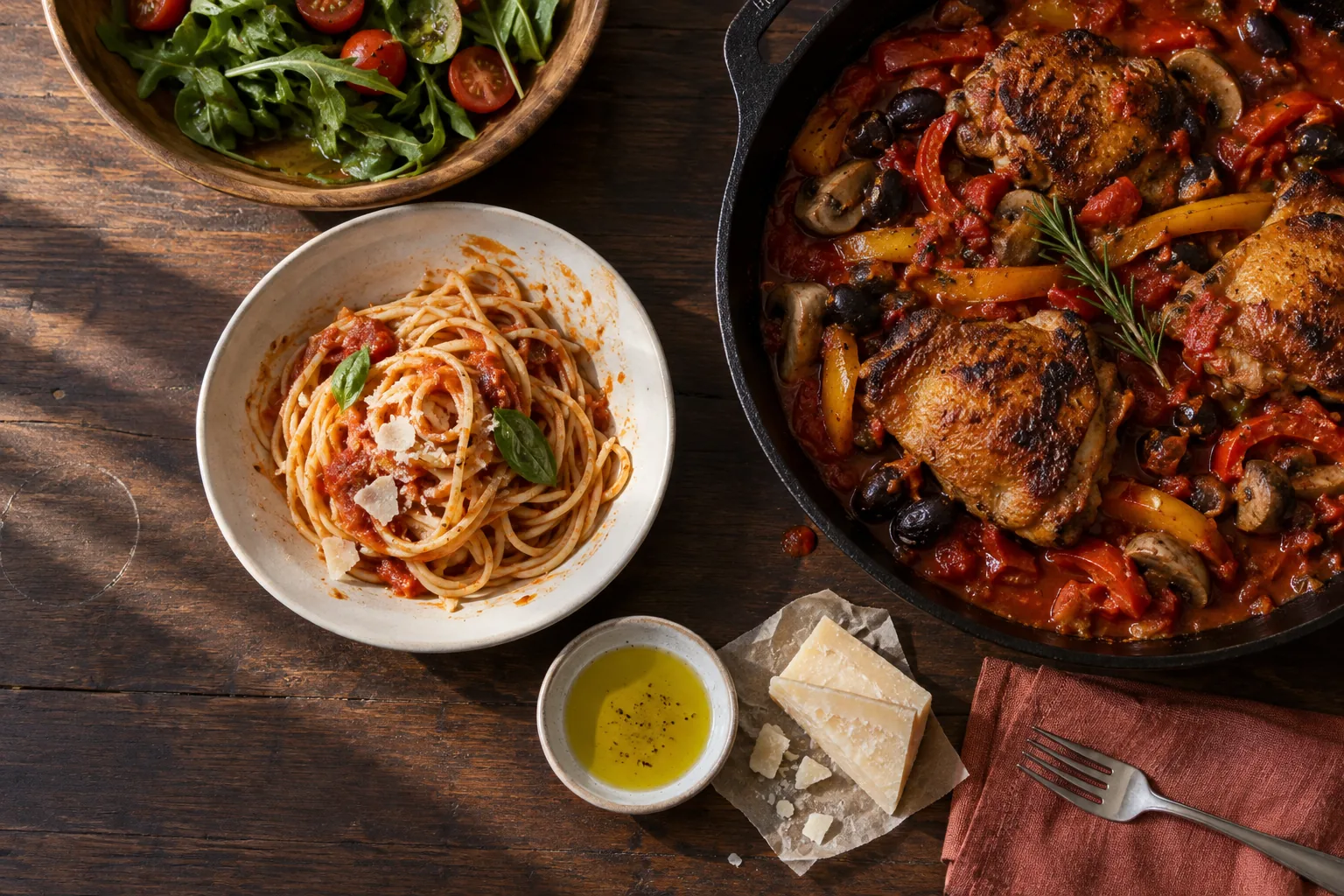
Somebody told you pasta was finished the day you got your diagnosis, and you believed them for a while. Then a family dinner came around, the red sauce simmered all afternoon, and you sat there with a plate of plain chicken. Good diabetic Italian recipes start from a different premise, because Italians have eaten pasta almost every day for centuries. The way they eat it turns out to be kinder to blood sugar than the way most of us learned. This October, with Columbus Day putting Italian-American cooking back on the table, it is worth looking at how that works.
Key Takeaways
- Pasta is not white bread: durum wheat pasta cooked al dente digests more slowly than most refined starches.
- The Italian portion is small: in Italy pasta is a first course of about two ounces dry, never the whole plate.
- Order changes the curve: vegetables and protein before the pasta blunt the rise that the same meal would otherwise produce.
- The sauce hides the sugar: many jarred marinaras add sugar, so reading the label matters as much as the noodles do.
- Most of the menu is already safe: chicken cacciatore, piccata, minestrone and roasted vegetables are Italian classics with almost no starch.
Why Pasta Behaves Better Than You Think
Pasta has a reputation it only partly deserves. Durum wheat semolina is pressed through a die and dried, and that process packs the starch inside a tight protein network. Consequently your digestive enzymes reach the starch more slowly than they reach the starch in bread made from the same wheat.
A meta-analysis of randomized trials on pasta found no weight gain when people ate pasta within a low glycemic pattern. That does not make pasta a free food, and it certainly does not replace your meter. However, it does mean that the question is how much and how, rather than whether.
Al Dente Is Not Just a Texture
Cooking time matters more than most people realize. Pasta boiled two minutes past the package time swells, softens and releases its starch faster, so the same portion hits harder. Pull it from the water while it still resists your teeth slightly. That is exactly how an Italian cook would serve it anyway.
Our guide to glycemic load vs glycemic index explains why the portion counts as much as the food itself. A food with a moderate index can still become a problem when the serving doubles, and restaurant pasta usually does.
Cooled and Reheated Pasta
There is a second trick that sounds strange until you try it. When cooked pasta cools in the refrigerator overnight, part of its starch reorganizes into resistant starch. Your body handles that form of starch much more like fiber. Leftover pasta reheated the next day may therefore produce a smaller rise than the same pasta served fresh from the pot. The effect varies from person to person, so check it with your own meter before you rely on it.
The Italian Plate, Rebuilt
The smartest diabetic Italian recipes copy the Italian home, where dinner arrives in courses rather than one crowded plate. Pasta, called the primo, comes first and comes small. Then the secondo follows with meat or fish, and a vegetable contorno sits alongside it.
That structure fits remarkably well with the plate method recommended in the American Diabetes Association meal planning guidance. Half the plate goes to vegetables, a quarter to protein, and a quarter to starch. The only real change for most of us is flipping the order, so the vegetables and protein come first.
| Course | Italian tradition | Diabetes-friendly version |
|---|---|---|
| Antipasto | Cured meats, cheese, marinated vegetables | Keep the vegetables and cheese, go light on bread |
| Primo | Pasta or risotto, about 2 oz dry per person | Same size, al dente, eaten after some vegetables |
| Secondo | Chicken, fish or meat, simply cooked | The anchor of the meal, a full palm-sized portion |
| Contorno | Greens, beans or roasted vegetables | Half the plate, dressed with olive oil |
| Dolce | Fruit, biscotti or a small pastry | Fresh fruit, or a few berries with ricotta |
Eating the salad and the chicken before the pasta is not an old wives’ tale. Our piece on food order and blood sugar walks through the research behind vegetables first. Meanwhile, a short walk after dinner helps as well, and Italians already have a word for it, the passeggiata. Our post-meal walk blood sugar guide explains why it works.
Four Diabetic Italian Recipes for Weeknights
Each of these diabetic Italian recipes serves four people and takes under forty minutes. Two use pasta in the Italian portion, and two skip it entirely, because some nights the sauce is the whole point.
Diabetic Italian Recipes: Chicken Cacciatore
This hunter’s stew is the easiest place to start, since it needs no pasta at all to feel complete.
| Ingredient | Amount |
|---|---|
| Boneless chicken thighs | 1.5 lb |
| Olive oil | 2 tbsp |
| Onion, sliced | 1 medium |
| Bell peppers, sliced | 2 |
| Mushrooms, quartered | 8 oz |
| Garlic, sliced | 3 cloves |
| Crushed tomatoes, no sugar added | 28 oz can |
| Dried oregano and rosemary | 1 tsp each |
| Black olives | a handful |
- Brown the seasoned chicken in the olive oil for four minutes a side, then set it aside.
- Soften the onion, peppers and mushrooms in the same pan for eight minutes.
- Add the garlic, tomatoes and herbs, then return the chicken to the sauce.
- Simmer covered for twenty minutes, then add the olives for the last five.
Serve it over a spoonful of white beans or with roasted cauliflower. Either way the sauce soaks in, and nobody at the table misses the bread.
Chicken Piccata in the Air Fryer
Piccata is lemon, capers and butter, and all three are free of carbohydrate. The classic version dredges the chicken in flour, but a light dusting of almond flour works just as well. Thin cutlets cook in the air fryer at 400°F for about ten minutes. Meanwhile the pan sauce comes together on the stove in three minutes.
Our air fryer chicken parmesan uses the same basket method with a crunchier crust. Rotate between the two and you have Italian chicken twice a week without repeating yourself.
Pasta e Fagioli, a Classic Among Diabetic Italian Recipes
This bean and pasta soup is Italian peasant food at its best, and the fix is simple: halve the pasta. Beans bring protein and fiber, which is why the classic ratio already favors your blood sugar. Double the beans in any standard recipe to make up the difference, and you get a thick, filling bowl.
| Ingredient | Amount |
|---|---|
| Olive oil | 2 tbsp |
| Onion, carrot and celery, diced | 1 cup each |
| Garlic | 3 cloves |
| Cannellini beans, rinsed | two 15 oz cans |
| Crushed tomatoes | 14 oz can |
| Low-sodium chicken broth | 5 cups |
| Small pasta such as ditalini | 3 oz dry |
| Parmesan rind (optional) | 1 piece |
- Cook the vegetables in the oil for ten minutes until soft and sweet.
- Add the garlic, beans, tomatoes, broth and rind, then simmer for fifteen minutes.
- Mash a cup of the beans against the pot to thicken the soup.
- Add the pasta and cook it just to al dente, then remove the rind.
It keeps four days in the fridge, and the pasta cools overnight into the resistant starch we covered above.
Spaghetti Night, the Italian Way
Real spaghetti still belongs on the menu, portioned the way Italians portion it. Two ounces of dry spaghetti per person, cooked al dente, tossed with a meat sauce and a big green salad first. Pair it with our air fryer turkey meatballs and the protein on the plate outweighs the pasta.
If you want the volume without the carbs, half spaghetti and half zucchini ribbons is a good compromise. Our list of low carb food alternatives covers the full swaps when you want to skip the pasta entirely.
Where Sugar Hides in Diabetic Italian Recipes
Many jarred marinara sauces list sugar in their first five ingredients. Tomatoes are naturally a little sweet, and manufacturers push that sweetness further because it sells. A half cup of some brands carries as much sugar as a cookie.
Look for jars with no added sugar before you build diabetic Italian recipes around them. Better still, make your own sauce in twenty minutes from canned tomatoes, garlic and olive oil. Our guide to sugar in condiments lists the other sauces that deserve the same scrutiny. Alfredo and pesto carry fat rather than sugar, so they barely move glucose, although their calories add up fast.
Olive Oil Is an Ally
Italian cooking runs on olive oil, and that is good news for anyone watching glucose. Fat slows digestion, therefore a pasta dressed with oil rises more gently than plain boiled pasta. The NIDDK guide to healthy living with diabetes recommends choosing healthy fats like these over saturated ones. Our piece on diabetes and healthy fats goes deeper into which oils to keep near the stove.
Diabetic Italian Recipes When You Eat Out
Restaurants serve pasta as a main course, often two or three times the Italian portion. Order it as a starter instead, or ask for a lunch-sized plate at dinner. Alternatively, choose a secondo such as grilled fish, veal piccata or chicken marsala, and add a side of sautéed spinach.
The bread basket is usually the bigger problem than the pasta. Send it back to the kitchen, or take one piece and dip it in olive oil rather than butter. Then enjoy the rest of the meal without doing arithmetic at the table.
Frequently Asked Questions
Is whole wheat pasta better for diabetes than regular pasta?
It carries more fiber, which slows digestion slightly. However, the difference in glucose response is smaller than most people expect. Portion and cooking time still matter more than the color of the noodle.
What about chickpea or lentil pasta?
Legume pastas carry roughly twice the protein and fiber of wheat pasta, and many people see a flatter rise. The texture is softer, so cook them a minute less than the package says and sauce them generously.
Can I eat pizza with diabetes?
Yes, within a sensible portion. Picture one or two slices of thin crust topped with vegetables and protein, after a salad. That meal behaves very differently from a deep dish pizza at midnight.
Should I skip dessert at an Italian meal?
Not necessarily. Italians often finish with fruit, and a few berries with a spoonful of ricotta satisfy the sweet tooth without a crash.
Your Italian Kitchen Is Still Open
Diabetes does not have to close the Italian chapter of your cooking. The cuisine itself hands you the tools: a small first course, a protein that anchors the meal, and vegetables dressed in olive oil. Moreover, the diabetic Italian recipes that skip pasta entirely, like cacciatore and piccata, rank among the most satisfying of all.
Start with one dinner this week, check your meter two hours afterward, and adjust from there. Your numbers will tell you how much pasta your body handles, and that answer is more useful than any rule. Buon appetito.
Check out the author’s book here: Diabetic Air Fryer Cookbook.


Leave a Reply