
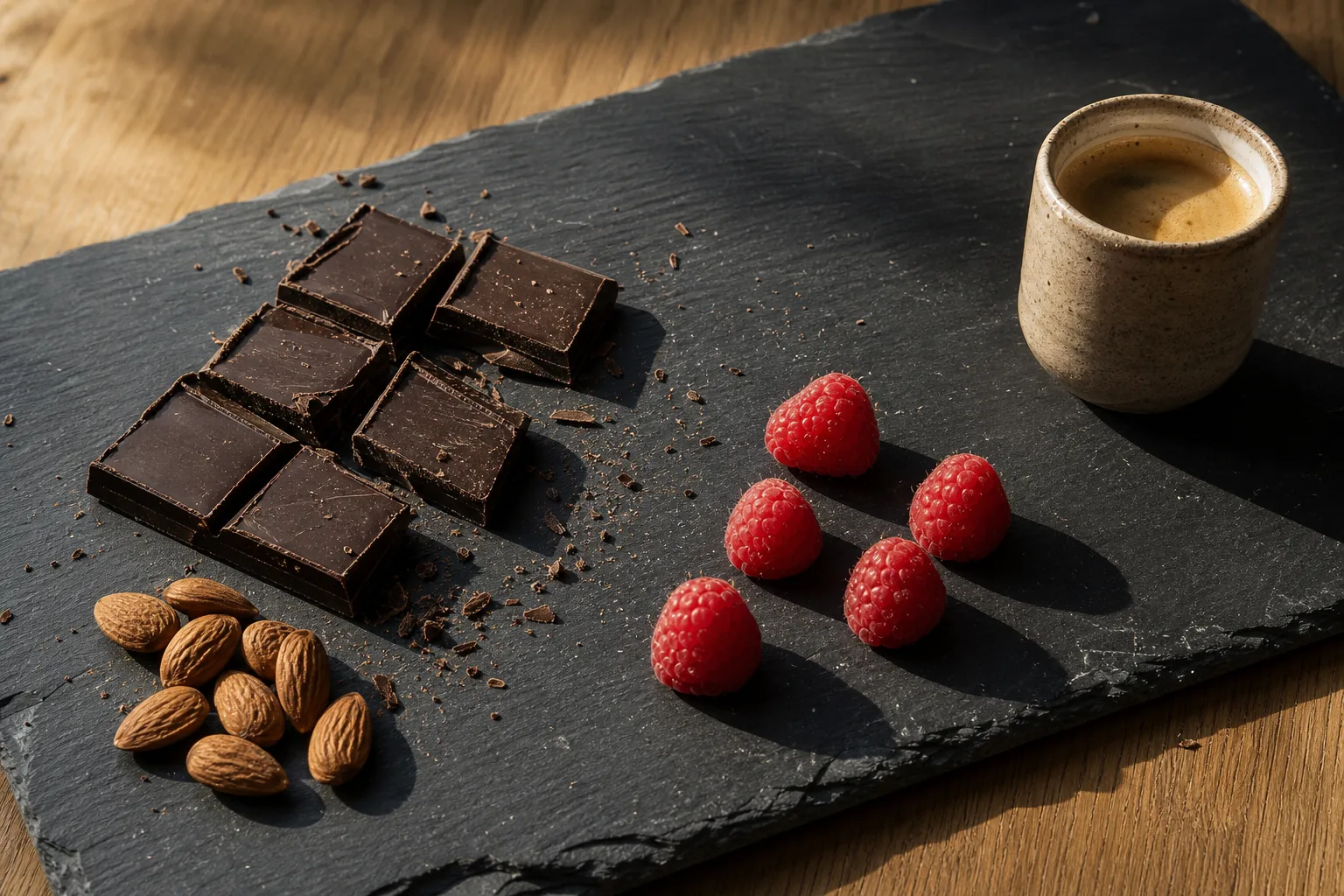
Few foods carry as much guilt as chocolate once you hear the word diabetes. Many people simply cut it out and then feel deprived every evening. So, is dark chocolate good for diabetics, or is it just a tasty excuse? The research gives a surprisingly encouraging answer, as long as you pay attention to the type of chocolate and the size of the portion.
This guide explains what large studies found, why dark and milk chocolate behave so differently, and how to choose a bar that respects your blood sugar. It also shows how to enjoy a small square without letting it turn into half a bar.
Key Takeaways
| What you will learn | Why it helps |
|---|---|
| What large studies found | Dark chocolate, not milk chocolate, was linked to a lower type 2 diabetes risk |
| Why cocoa flavanols matter | Trials show they can improve insulin sensitivity |
| How much to eat | About one ounce, a few times a week, fits most plans |
| How to read a chocolate label | Cocoa percentage, sugar and serving size tell the real story |
| How to fit it into your day | Pairing and timing soften the effect on glucose |
Is Dark Chocolate Good for Diabetics? What Large Studies Found
The strongest evidence comes from a 2024 analysis in The BMJ. Researchers followed 192,208 adults in three long-running American cohorts for decades and tracked what they ate.
People who ate at least five servings of any chocolate a week had a 10% lower risk of type 2 diabetes. However, the real difference came from the type. Those who ate dark chocolate five or more times a week had a 21% lower risk, and each weekly serving of dark chocolate was linked to a 3% drop.
Milk chocolate told another story. It showed no link with lower diabetes risk, and it was tied to long-term weight gain, while dark chocolate was not. That contrast is the key to the whole question.
There is an important limit, though. These are observational data, which show a link and not a cause. People who choose dark chocolate may also eat better in other ways. The authors themselves call for clinical trials to confirm the results.
Why Dark and Milk Chocolate Behave Differently
The answer lies in two things: cocoa and sugar. Dark chocolate contains more cocoa solids, which carry natural compounds called flavanols. Milk chocolate replaces much of that cocoa with sugar and milk solids, so each square brings more sugar and fewer flavanols.
What Cocoa Flavanols Do
A meta-analysis in The Journal of Nutrition pooled 19 controlled trials with 1,131 participants. Cocoa flavanols improved insulin resistance, lowered fasting insulin and triglycerides, and raised HDL cholesterol. They also reduced C-reactive protein, a marker of inflammation.
These trials often used cocoa products rich in flavanols, not ordinary candy bars. Heavy processing, such as alkalizing cocoa, can strip away much of that benefit. Therefore, a higher cocoa percentage is a useful guide, but it is not a guarantee.
The Sugar and Fat Still Count
An ounce of 70% to 85% dark chocolate brings about 170 calories, 12 grams of fat and 13 grams of carbs, with roughly 3 grams of fiber and 7 grams of sugar. That is modest next to a milk chocolate bar, yet it still adds up. The fat slows digestion, which helps glucose rise gently. Our guide to diabetes and healthy fats explains why that matters.
How Much Dark Chocolate Fits a Diabetic Plan
For most people, about one ounce, or two to three small squares, is a sensible portion. That amount delivers flavor and flavanols without a large carb load. Enjoying it a few times a week matches the pattern linked to lower risk in the BMJ study.
Count those carbs in your daily total, just as you would for fruit or bread. The concept of glycemic load vs glycemic index explains why a small portion of a food matters more than its label. Also, check your glucose one to two hours after eating chocolate the first few times. Your own meter gives the most honest answer.
The NIDDK guide to healthy living with diabetes recommends a meal plan with fewer foods high in added sugar. A small square of dark chocolate can fit that plan, while a full bar every night cannot.
How to Choose a Bar: Reading the Label
A chocolate bar is only as good as its ingredient list. These checks take a few seconds in the store and make a real difference.
Look for 70% Cocoa or Higher
The cocoa percentage tells you how much of the bar comes from the cocoa bean. At 70% or more, sugar makes up a smaller share. At 85% or 90%, the flavor turns more bitter, but the sugar drops even further.
Check the Sugar and the Serving Size
Many labels list a serving as half a bar or less, so the numbers can look smaller than your real portion. Compare grams of sugar per 100 grams between brands instead. Our tips on decoding food labels help you spot these tricks.
Watch the Fillings
Caramel, nougat, cookie pieces and sweet fruit fillings add sugar quickly. Plain bars, or bars with nuts, are the safer picks. Our guide to hidden sugars in food lists the names sugar hides under.
Sugar-Free Bars Need a Second Look
Sugar-free chocolate often uses sugar alcohols such as maltitol, which can still raise blood sugar and upset the stomach. Bars sweetened with stevia or erythritol usually behave better. Our overview of sugar alternatives compares the options.
Smart Ways to Enjoy Dark Chocolate
Pairing changes how your body handles the carbs. A few almonds, a spoon of peanut butter or a cup of plain Greek yogurt add protein and fat, and they slow the glucose curve. Fresh raspberries bring fiber and color with very little sugar.
Timing helps too. Eating chocolate after a balanced meal, rather than alone on an empty stomach, tends to soften the rise. Our article on food order and blood sugar explains why the sequence of a meal matters.
You can also bake with it. Unsweetened cocoa powder brings the flavanols with almost no sugar, and it works well in mousse, oatmeal and smoothies. For more ideas, see our diabetic dessert recipes and our tips for low glycemic baking.
Simple Pairings to Try
- One square with ten almonds: crunch, healthy fat and protein in a single small snack.
- Shaved chocolate over Greek yogurt: a spoon of plain yogurt topped with a few curls and some raspberries.
- Cocoa oatmeal: stir a teaspoon of unsweetened cocoa into a small bowl of oats with cinnamon.
- Chocolate and strawberries: dip three or four berries in a little melted 85% chocolate and chill them.
Each of these keeps the portion small while adding fiber, protein or both. In addition, they make a single square feel like a real dessert instead of a teaser.
When to Be More Careful
Some people should talk with their care team before adding chocolate regularly. This applies if your glucose is hard to control, if you are working on weight loss, or if you take medication that can cause lows. Dark chocolate also contains caffeine, so an evening square may disturb sleep for sensitive people.
Similarly, chocolate is not a treatment for a low blood sugar. Its fat slows sugar absorption, so it works too slowly. Fast-acting glucose, such as tablets or juice, is the right choice in that moment.
Frequently Asked Questions
Can diabetics eat dark chocolate every day?
Many can enjoy a small portion daily, such as one square or two, if they count the carbs. However, the studies linked benefits to a few servings a week, so daily chocolate is a choice, not a goal.
What percentage of dark chocolate is best for diabetics?
Choose 70% cocoa or higher. Bars at 85% or 90% carry even less sugar, although they taste more bitter. Always compare sugar per 100 grams between brands.
Does dark chocolate raise blood sugar?
It can raise it a little, because it contains carbs and some sugar. Its fat and fiber slow the rise, so a small portion usually has a gentle effect. Test with your meter to see your own response.
Is dark chocolate good for diabetics compared with milk chocolate?
Yes, clearly. Dark chocolate was linked to a lower risk of type 2 diabetes, while milk chocolate was not and was tied to weight gain. Milk chocolate also carries much more sugar per square.
Is Dark Chocolate Good for Diabetics? A Small Square, Chosen Well
So, the honest answer is yes, in the right form and portion. A square or two of 70% dark chocolate, eaten after a meal or next to nuts, fits well in most diabetic plans. Treat it as a pleasure you plan for, count it in your carbs, and ask your doctor or dietitian how it fits your own numbers.
Check out the author’s book here: Diabetic Air Fryer Cookbook.


Leave a Reply