

Weight loss surgery changes the way your body handles every bite you take. Most patients focus on what they can eat, from protein goals to tiny plates and cleaner pantries. However, one habit matters just as much as the food itself, and that habit is how you chew. Chewing food after bariatric surgery is not about manners, because your new pouch can no longer grind food.
Before surgery, your stomach worked like a strong blender that churned food with plenty of acid. After a sleeve, a bypass or a duodenal switch, that blender is mostly gone. Your pouch is small and firm and produces far less acid than before, so a piece of food swallowed too quickly can act like a cork in a narrow funnel.
This guide explains what changed in your digestive tract and the habit that protects it, the 30/30 rule. It also covers the foods that cause trouble and simple tricks that help you slow down.
Key Takeaways
- Your teeth now do most of the mechanical work that your old stomach used to handle.
- The 30/30 rule means chewing each bite about 30 times and keeping drinks 30 minutes away from meals.
- Food that gets stuck can trigger painful mucus, spasms and vomiting, often called the foamies.
- Slow chewing gives fullness hormones enough time to reach your brain before you overeat.
- Dry chicken, doughy bread, tough meat and stringy vegetables need extra care at every meal.
- Simple habits, such as putting your fork down between bites, make slow eating much easier.
How Your Digestion Changes After Surgery
Digestion starts in your mouth, where saliva contains enzymes such as amylase, which begin breaking down starches as soon as food touches your tongue. When you rush a meal, you skip much of this first step and send large pieces down the esophagus.
A normal stomach can cope with those pieces because it simply makes more acid and churns harder. After surgery, however, your pouch holds only a few ounces at a time. Its exit is also narrow, whether it is the pyloric valve after a sleeve or the new bypass opening.
Large chunks cannot pass easily through that small opening, so they sit in the pouch and create pressure. Because the pouch cannot grind them down, it depends on the work your teeth have already done. That is why chewing food after bariatric surgery becomes a daily safety habit rather than a small detail.
The 30/30 Rule Explained
Most bariatric programs teach a simple framework called the 30/30 rule. It covers two things at once: how you break down solid food and how you time your drinks. Together, these steps keep food moving smoothly and help your pouch send clear fullness signals.
Chewing Food After Bariatric Surgery 30 Times per Bite
Chew every bite of solid food about 30 times, or until it feels as smooth as applesauce. There should be no lumps left when you swallow, and the food should be fully mixed with saliva. This way, chewing food after bariatric surgery lets your mouth do the heavy work before anything reaches the pouch. In addition, soft food slides through the narrow exit without getting stuck.
Waiting 30 Minutes Before and After Drinking
The second half of the rule separates food from fluids. Stop drinking about 30 minutes before a meal, then wait at least 30 minutes after your last bite, because drinking while you eat can flush food out too early. As a result, you may feel hungry again quickly, and bypass patients may face dumping syndrome.
The American Society for Metabolic and Bariatric Surgery stresses these eating habits as part of long-term success after surgery. Since fluids still matter, it also helps to plan your sips across the day. For example, if you enjoy a warm morning drink, Coffee After Bariatric Surgery explains when caffeine can return safely.
What Happens When You Do Not Chew Enough
Skipping careful chewing brings clear consequences, and your body quickly teaches you to slow down through a series of unpleasant reactions.
The Foamies and Esophageal Spasms
When a piece of dry meat or bread lodges at the pouch exit, your body tries to push it through. To do that, the esophagus and pouch produce thick, frothy mucus to coat the stuck food. Because the exit is blocked, that mucus has nowhere to go except back up.
Patients describe strong chest pressure, painful spasms and, finally, vomiting a foamy white liquid. The bariatric community calls this reaction the foamies, and careful chewing prevents almost every episode.
Dumping Syndrome
Dumping syndrome, especially common after gastric bypass, happens when dense or sugary food empties too quickly into the small intestine. The intestine then pulls fluid from your bloodstream to dilute the heavy load. According to Cleveland Clinic, symptoms can include a racing heart, sweating, nausea, cramps and diarrhea.
Pouch Stretching
Overeating and swallowing large chunks put steady pressure on the pouch wall, and over several years that pressure can gradually stretch the pouch and its opening. As a result, you may lose some restriction and slowly start to regain weight.
Chewing Food After Bariatric Surgery Helps Fullness and Nutrition
Beyond preventing pain, slow chewing also supports steady weight loss and better nutrition.
Chewing Food After Bariatric Surgery Gives Fullness Hormones Time
Fullness depends on hormones that travel from your gut to your brain, and that message moves slowly. It usually takes about 20 minutes for your brain to register that you have eaten enough. If you finish a meal in five minutes, you can easily eat more than your pouch can hold.
On the other hand, chewing every bite 30 times naturally stretches a meal to 20 or 25 minutes. That pace lets your brain and your pouch stay in sync, which prevents accidental overeating. For a wider approach to this habit, read Mindful Eating After Bariatric Surgery.
Better Nutrient Absorption
Bariatric patients already face a higher risk of low vitamins and minerals, but when you chew food into a smooth paste, you greatly increase its surface area. Your limited enzymes and acid can then reach more of the protein, iron and calcium in each bite. That matters for long-term health, as our article on Bariatric Bone Health explains in detail.
Good chewing also supports regular digestion further down the tract, since well-broken food moves more smoothly, and that can ease a common problem described in Constipation After Bariatric Surgery.
Foods That Need Extra Care
Some foods are hard to chew into an applesauce texture. During your move back to regular food, treat these textures with patience and caution.
- Dry poultry: Chicken and turkey breast are lean, so they turn stringy and dry when overcooked. Cook them in broth or sauce to keep them moist and easier to chew.
- Doughy bread: White bread, bagels and thick pizza crust mix with saliva into a sticky paste. That paste can swell in the pouch and sit there like glue.
- Tough red meat: Steak and pork chops need a lot of chewing work. Cut them into pieces no bigger than a pencil eraser before each bite.
- Stringy vegetables: Celery, asparagus and pineapple contain tough fibers that resist your teeth. Cook vegetables until they are soft, especially during the first year.
New flavors add their own challenges, so if you miss bold seasoning, Spicy Food After Bariatric Surgery explains how to reintroduce heat without irritating your pouch.
Practical Ways to Slow Down
Knowing you should chew 30 times is easy, but doing it when you feel hungry is much harder. Old habits run deep, so these small barriers can help you change your pace.
Put Your Fork Down Between Bites
Never hold your fork while you chew, so take a small bite, set the fork on the table and rest your hands in your lap. Then pick it up again only after you have chewed and swallowed completely.
Use Smaller Cutlery
A standard fork carries more food than your pouch needs in one bite, so try a baby spoon, an appetizer fork or even a pair of chopsticks. These tools limit how much food reaches your mouth, so your bites shrink automatically.
Turn Off Screens During Meals
Eating in front of the television or your phone often leads to swallowing on autopilot. Therefore, make the table a screen-free zone and focus on the taste, texture and temperature of each bite. This habit also helps if you tend to snack between meals, a pattern covered in How to Stop Grazing After Bariatric Surgery.
Set a Meal Timer
Set a 20-minute timer on your phone when you sit down to eat, because your goal is to make your small portion last until the timer rings. If you finish in eight minutes, you know to slow your chewing at the next meal.
Restaurants can make slow eating harder, because the conversation and the large plates pull your attention away. Our Bariatric-Friendly Restaurant Guide shares tips for ordering and pacing yourself when you eat out.
Frequently Asked Questions
Does the 30/30 rule last forever? Yes, because your pouch will never churn food like your old stomach did. It may become slightly more forgiving over time, yet rushed meals can still cause pain and weight regain. Treat the rule as a lifelong habit rather than a short phase.
What if food dissolves before 30 chews? The number 30 is a guide, not a strict law. Soft foods such as yogurt, scrambled eggs or flaky fish may reach a smooth texture in 15 chews. What really matters is the texture of the food before you swallow.
What should I do if food gets stuck? Stop eating right away and do not wash it down. Instead, walk around gently and let gravity help the food move along. Then choose liquids or soft foods for your next meal so the irritation can settle.
Why does drinking with meals lead to weight regain? Water washes dense protein into the intestine too quickly. Your pouch then empties, and you lose the feeling of restriction that keeps hunger away. As a result, hunger returns sooner and grazing becomes more likely during the day.
Can I have alcohol if I chew well? Chewing well does not slow how fast your body absorbs alcohol. Alcohol also breaks the fluid rule and adds empty calories to your day. Read Alcohol After Bariatric Surgery before you consider any drink after your operation.
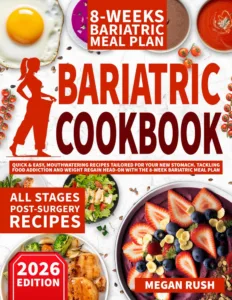
Check out the author’s book here: Bariatric Cookbook.

Leave a Reply