

The recipe says it serves six, and your pouch holds about half a cup. You cook the whole pan anyway, because that is what the instructions asked for, and then you eat the same chicken for five days. Small Batch Bariatric Cooking fixes that mismatch, and it turns out to be a survival skill rather than a hobby.
Nobody warns you about the leftovers, although they cause more daily frustration than the measured ounces ever do.
Key Takeaways
- Cooking small saves money, because food you throw away costs more than food you actually eat.
- The right pan matters, since a single chicken breast burns in a skillet built for four.
- Buy in the quantity you need, using the salad bar and the butcher counter instead of family packs.
- Prep components, not finished meals, so one cooked protein becomes three different dinners.
- Freeze in tiny portions, and your worst evening still ends with a real meal instead of a drive-thru.
Why a Family Recipe Fails a Bariatric Kitchen
Restriction defines post-operative life, and it reshapes every decision you make about food and cooking. In the early weeks your pouch may hold only a few tablespoons, and even a year out a large meal often measures less than a cup. The standard advice to simmer a big pot of chili on Sunday collapses under that arithmetic, because the pot would last you three weeks.
Two bad outcomes follow, and most patients meet both within the first year. Food spoils in the fridge before you can finish it, so the grocery budget quietly leaks. Meanwhile the hassle pushes you toward bars and shakes, which deliver protein but skip the micronutrients that whole foods carry.
Food boredom then does the rest of the damage, quietly, across the course of a long week. Eating the same reheated portion for five nights makes any kitchen feel like a punishment, therefore grazing on crackers starts to look reasonable. Our guide to bariatric menu rotations explains why variety protects your results as much as protein does.
Small Batch Bariatric Cooking Solves Two Problems at Once
Preparing one to three servings at a time keeps the food fresh and the palate interested. You eat the meal at its best, and perhaps one lunch follows the next day.
The second gain is mental, and it arrives the first evening a recipe stops intimidating you. Dividing a casserole recipe by eight discourages even confident cooks, whereas a two-portion plan asks almost nothing of you. The American Society for Metabolic and Bariatric Surgery stresses that long-term success rests on sustainable daily habits, and a kitchen you can face on a tired Tuesday counts as one.
The Tools That Make Tiny Portions Easy
Large pans punish small amounts, and the mismatch shows up within minutes of turning on the heat. A single fillet spreads thin across a twelve-inch skillet, the juices evaporate, and dinner turns to leather. Scale-appropriate equipment removes most of that frustration for very little money.
Cookware Sized for One Plate
An 8-inch skillet and a 1-quart saucepan cover nearly everything you cook alone. They hold heat around a single chicken breast, and a small portion of sauce simmers without vanishing in four minutes.
Ramekins in the 4oz and 6oz sizes earn their shelf too. They bake single-serving casseroles, meatloaves and egg bakes, and their walls create a hard physical limit on the portion. Because that limit exists before you sit down, the plate does the measuring instead of your willpower.
Small Appliances Worth the Counter Space
- Mini chopper: a 3-cup model handles a quarter of an onion, while a full food processor simply smears it around.
- Air fryer: the workhorse of a one-person kitchen, since it heats instantly and roasts a handful of asparagus.
- Digital scale: precision protects your protein target, because guessing drifts downward week after week.
- Mini slow cooker: a 1.5-quart pot makes two servings of pulled pork without scorching them on the bottom.
The mini chopper matters most during the soft food stage, when tuna salad, pesto and purees carry the week. Our bariatric pureed food stage recipes show how much flavor that texture can still hold. The air fryer then takes over later, and our 30 minute bariatric meals lean on it heavily for weeknights.
Shopping for One Without Waste
Supermarkets exist to sell families more than they need. Bulk packaging advertises value, although the value disappears the moment half of it lands in the bin. Small Batch Bariatric Cooking therefore begins in the aisle rather than at the stove.
The Salad Bar and the Butcher Counter
The salad bar is the most underused tool in the store. You buy three broccoli florets, two tablespoons of diced peppers and a sprinkle of feta, instead of a whole head and an entire jar. The price per pound looks high, however the price per meal drops because nothing rots.
Butchers break packages more willingly than most shoppers assume. Ask for a single steak, two chicken thighs or a quarter-pound of ground turkey, and you walk out with exactly one week of protein. If you do buy the family pack, portion it into freezer bags the moment you get home.
Frozen produce finishes the job that the salad bar and the butcher counter started. Growers harvest and freeze at peak ripeness, so you pour out half a cup of green beans and return the rest to the freezer. There is no slimy spinach at the bottom of the drawer, and the FDA’s guidance on storing food safely explains why a steady freezer temperature protects both texture and safety.
The Component Method Beats the Casserole
Prepping a whole lasagna guarantees that you will hate lasagna by Thursday. Prepping components works differently, because you cook the hard part once and assemble fresh meals in minutes.
Grill two chicken breasts on Sunday, then change only the flavor profile:
- Monday: dice 2oz into a green salad with a sharp vinaigrette.
- Tuesday: mix 2oz with Greek yogurt and curry powder for a wrap.
- Wednesday: stir-fry 2oz with frozen vegetables and a splash of soy sauce.
The same logic works with ground meats, roasted vegetables and hard-boiled eggs. Sauces carry most of the variety, and our bariatric sauce solutions turn one protein into four dinners that taste unrelated.
| Full-batch prep | Component prep | |
|---|---|---|
| What you cook | One finished recipe in six servings | One protein plus two vegetables, undressed |
| Day three | The same dish, reheated again | A wrap, a salad or a stir-fry |
| Waste risk | High, since the pan outlives your appetite | Low, because portions leave separately |
| Time on Sunday | Ninety minutes in one block | Thirty minutes, plus five each evening |
| Palate fatigue | Arrives by midweek without fail | Rare, as the flavor changes daily |
| Freezer value | Bulky containers nobody reaches for | Small blocks that thaw in minutes |
Read that table as a pattern rather than a rule, because your appetite and your stage decide the details. Still, most people who abandon meal prep abandon the left-hand column specifically.
Cooking Techniques That Suit Small Batch Bariatric Cooking
Technique matters more when the quantity shrinks, since small amounts dry out and overcook fast. Three methods handle almost every single-serving dinner, and none of them asks for special equipment.
The mug meal deserves more respect than microwaves usually get. A crustless quiche, a protein muffin or a moist meatball cooks in under two minutes, which suits breakfast and an office lunch equally.
Sheet pan dividers let one tray hold a complete meal. Fold a strip of aluminum foil into a wall, put seasoned fish on one side and zucchini on the other, and the flavors stay separate. The same trick scales across a whole week once you prep two trays at a time.
Foil packet cooking, or en papillote, steams food in its own juices. Dry meat defeats many bariatric patients, therefore this method solves a real problem rather than a theoretical one. Lay chicken or white fish on foil, add herbs, lemon and a few vegetables, seal the parcel, and bake.
Freezing Is Your Backup Plan
Some evenings you will not cook, and pretending otherwise is how takeout wins. A stocked freezer turns those evenings into a two-minute decision.
Small Batch Bariatric Cooking Lives in the Freezer Tray
Silicone freezing trays, often sold for baby food, freeze portions in 2oz, 4oz or 1-cup blocks. When you do make soup or chili, freeze it in the tray, then pop the cubes into a labeled bag once they set.
Lunch afterward means grabbing exactly one cube and reheating it. Our high-protein bariatric soup recipes freeze particularly well, and our bariatric freezer meals for easy weeknights cover the containers and thawing in more detail.
Labeling is not optional, so write the contents and the date on every bag before it freezes.
A Three-Day Mini Menu
Here is how the approach looks across an ordinary week, with nothing cooked twice.
Day one:
- Breakfast: one scrambled egg with spinach, cooked in the mini skillet.
- Lunch: tuna salad made with half a small can and Greek yogurt.
- Dinner: air fryer salmon, 4oz, with three roasted asparagus spears.
Day two:
- Breakfast: the remaining half can of tuna, mashed with avocado.
- Lunch: turkey roll-ups, 2oz, with a cheese stick and four cucumber slices.
- Dinner: foil packet chicken breast with lemon and dill.
Day three:
- Breakfast: a protein shake, for the mornings that start late.
- Lunch: leftover chicken from day two, chopped over greens.
- Dinner: high-protein soup, defrosted from the freezer stash.
Holidays and travel break this rhythm, which is normal rather than a failure. Our bariatric holiday recipes handle the crowded table without abandoning your portion.
When Cooking for One Feels Pointless
The real barrier is rarely technical, since most people know perfectly well how to cook an egg. We learn that cooking deserves a crowd, so the question “why dirty a pan just for me?” arrives with surprising force.
Turn the question around, because the answer changes completely once you hear it from the other side. Ten minutes at the stove is the ordinary form of self-respect, and it restates the commitment you made when you chose surgery. Your body needs high-quality fuel, and nobody else will assemble it for you.
Skipping the meal has a predictable ending too, and most of us have lived it more than once. Hunger arrives anyway, the cupboard offers crackers, and grazing quietly rebuilds the habit that surgery interrupted. Flavor is the best defense here, which is why our bariatric international recipes matter more than another lecture about protein.
Frequently Asked Questions
Is it okay to eat the same thing every day?
If you enjoy it and it covers your nutritional needs, then yes. Variety still gives you a broader spectrum of vitamins and minerals, however, so ask your dietitian whether your current rotation leaves any gaps.
How do I adjust baking recipes for one?
Baking is chemistry, therefore dividing a cake recipe by twelve rarely works. Look for mug cake recipes or small batch baking instead, or bake the full tray of protein muffins and freeze them individually.
What if I live with family who eat normally?
Cook the family meal and modify your own portion, eating the taco filling without the shell. Alternatively, keep the small batch approach for the lunches you eat alone and share the protein at dinner.
Can I use a slow cooker for small batches?
Standard slow cookers are too large, and food scorches against the empty sides. A 1.5-quart mini model handles two servings of chili or pulled pork comfortably.
Start With One Small Pan
You do not need a new kitchen, only a smaller one. Buy the 8-inch skillet, clear a shelf in the freezer, and cook two portions instead of six this week.
The skill compounds quietly, week after week, until the small pan becomes the obvious one to reach for. Waste drops, the grocery bill follows, and dinner starts tasting like something you chose rather than something you endured. Between meals, our high-protein bariatric snacks keep the gap covered without a single cracker. Cooking for one person is worth the pan, and that person is you.
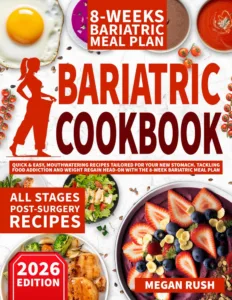
Check out the author’s book here: Bariatric Cookbook.

Leave a Reply