

The liquid weeks are behind you, and the next phase arrives with a word nobody loves hearing: pureed. Most people picture beige baby food in a tiny bowl, eaten slowly out of obligation. Good Bariatric Pureed Food Stage Recipes change that picture completely, because texture and flavor are two separate problems. You can smooth the texture all the way down and still cook something you actually want to eat.
This stage is short, yet it carries real weight for your healing and your protein numbers. Below you will find the rules that keep it safe, nine bariatric pureed food stage recipes worth repeating, and the flavor tricks that fight the boredom everyone hits around day ten.
Key Takeaways
- Pureed means completely smooth, so think thick yogurt or applesauce rather than finely chopped food.
- Protein leads every meal, although your dietitian sets the daily target that fits your surgery and your labs.
- Portions stay tiny, therefore small ramekins and baby spoons do more for you than willpower does.
- Liquids and solids stay separate, because drinking with a meal washes food out of your pouch early.
Why the Pureed Stage Protects Your Healing Stomach
Your new stomach is still knitting itself together, and the staple or suture line stays delicate for weeks. Rough edges, strings and stray chunks can irritate that tissue, so blending removes the risk before the food ever reaches you. The stage does a second job as well, since it rehearses the habits you will keep for life.
Small portions, a slow pace and careful attention all get easier to practice with a forgiving texture. The American Society for Metabolic and Bariatric Surgery describes these staged diets as standard practice after surgery, although every program writes its own timeline. Your surgeon decides when you move forward, and that date belongs to your team rather than to any article.
Texture Rules for Bariatric Pureed Food Stage Recipes
Pureed means no lumps, no strings and no seeds anywhere in the bowl. The target consistency resembles smooth applesauce, thick yogurt or creamy pudding that falls slowly off a spoon.
Any food that refuses to break down completely, such as tough meat or stringy celery, simply stays off the list for now. In the first week, many people push each batch through a fine-mesh sieve to catch whatever the blender missed.
Protein First in Bariatric Pureed Food Stage Recipes
Protein rebuilds tissue and protects the muscle you would otherwise lose during rapid weight loss. Every meal and every snack therefore starts with a protein source, and the vegetables or fruit ride along behind it.
Canned chicken, flaked white fish, eggs, cottage cheese, plain Greek yogurt, tofu and blended beans all puree well. Unflavored protein powder stirs into savory and sweet blends alike without changing how they taste. Your bariatric team sets your daily protein goal, since that number depends on your procedure, your weight and your bloodwork.
Portions, Pace and the Liquid Rule
Your meals now measure roughly two to four tablespoons, which looks alarming until your pouch reminds you why. A two-ounce meal should take twenty to thirty minutes, so set the bowl down between bites rather than racing.
Keep drinking separate from eating, and treat that rule as permanent rather than temporary. Stop liquids thirty minutes before a meal, drink nothing during it, and wait thirty minutes afterward before sipping again. Liquid pushes food through your pouch too fast, which brings discomfort and steals the space your nutrition needs.
| Pureed stage | Soft food stage | |
|---|---|---|
| Texture | Completely smooth, no lumps | Mashable with a fork |
| Typical portion | 2–4 tablespoons | 1/4 to 1/2 cup |
| Protein sources | Blended chicken, fish, eggs, beans | Scrambled eggs, baked fish, ground turkey |
| Vegetables | Cooked, then blended smooth | Cooked until fork-tender |
| Equipment | Blender and fine-mesh sieve | Fork and a small plate |
| Moving on | Your surgeon clears you | Your surgeon clears you |
Tools That Make This Stage Easier
A high-power blender or food processor does the heavy lifting, and a weak machine leaves grit behind. An immersion blender handles soups straight in the pot, which saves washing a full jar.
Keep a fine-mesh strainer nearby as your safety net, plus a stack of two-ounce and four-ounce containers with lids. Baby spoons sound silly, however they force the small bites and slow pace this stage demands. That container habit carries forward nicely into bariatric freezer meals once you reach the stages beyond this one.
Savory Bariatric Pureed Food Stage Recipes
Thin any of these with water, low-sodium broth or unsweetened almond milk until the spoon test looks right. Season more boldly than feels natural, because blending mutes flavor considerably.
1. Classic Creamy Ricotta Bake
- Ingredients:
- 1/2 cup low-fat ricotta cheese
- 1/4 cup low-fat, shredded mozzarella cheese
- 1 tbsp grated Parmesan cheese
- 1 tbsp tomato sauce or pasta sauce (no sugar added, no chunks)
- Pinch of Italian seasoning or dried oregano
- Instructions:
- Preheat the oven to 375°F (190°C).
- Mix all the ingredients well in a small oven-safe ramekin.
- Bake for 15-20 minutes, until hot and bubbly.
- Cool slightly, then blend with a splash of warm water if any cheese turns stringy.
2. Simple Pureed Chicken or Turkey Salad
- Ingredients:
- 3 ounces canned chicken or turkey (packed in water), drained well
- 1-2 tbsp plain Greek yogurt or low-fat mayonnaise
- 1/4 tsp onion powder (do not use raw onion)
- Splash of low-sodium chicken broth
- Instructions:
- Place all the ingredients in a small blender or food processor.
- Blend until completely smooth, adding broth a teaspoon at a time.
- Stop when the texture resembles a creamy, spreadable hummus.
- Serve cold.
3. “Refried” Bean Puree
- Ingredients:
- 1/2 cup canned pinto or black beans, rinsed and drained
- 1 tbsp plain Greek yogurt
- 1/4 tsp cumin
- 1/4 tsp chili powder
- Low-sodium vegetable or chicken broth to thin
- Instructions:
- Place the beans, yogurt and spices in a blender.
- Blend until smooth, adding broth slowly until it looks like smooth refried beans.
- Reheat in the microwave or on the stovetop.
4. Simple Pureed Egg Salad
- Ingredients:
- 1 hard-boiled egg
- 1-2 tbsp plain Greek yogurt or low-fat cottage cheese
- 1/4 tsp mustard (optional, for flavor)
- Pinch of salt and paprika
- Instructions:
- Place all the ingredients in a small blender.
- Blend until fully smooth, leaving no chunks of egg white anywhere.
- Serve cold.
5. Creamy White Fish Puree
- Ingredients:
- 2 ounces baked or poached cod, tilapia, or other flaky white fish
- 1 tbsp plain Greek yogurt
- Splash of vegetable broth
- Pinch of dried dill or lemon-pepper seasoning
- Instructions:
- Cook the fish through until it flakes easily.
- Add all the ingredients to a blender.
- Blend until smooth and creamy, then serve warm.
Soups and Vegetables in Your Bariatric Pureed Food Stage Recipes
Blended soups carry vegetables into this stage gently, and a scoop of unflavored protein powder turns them into a meal. Our collection of high-protein bariatric soup recipes covers the versions that follow you through every later phase too.
6. Roasted Carrot and Ginger Soup
- Ingredients:
- 1 cup carrots, peeled and chopped
- 1/4 tsp grated fresh ginger (or 1/8 tsp dried)
- 1/2 tsp olive oil
- 1 cup low-sodium vegetable or chicken broth
- 1 scoop unflavored protein powder (optional)
- Instructions:
- Toss the carrots and ginger with olive oil, then roast at 400°F (200°C) for 20-25 minutes.
- Transfer the roasted carrots and ginger to a blender with the broth.
- Blend until silky smooth, then reheat gently on the stove.
- Whisk in the protein powder after reheating, because boiling makes it clump.
7. Creamy Spinach and Cottage Cheese
- Ingredients:
- 1/2 cup frozen spinach, cooked and squeezed dry
- 1/2 cup low-fat cottage cheese
- Pinch of garlic powder and black pepper
- Instructions:
- Place the cooked spinach and cottage cheese in a blender.
- Blend until completely smooth and bright green.
- Serve cold or gently warmed.
Sweet Bariatric Pureed Food Stage Recipes
Sweet cravings arrive whether or not the plan makes room for them, so these two keep protein in front.
8. Protein-Boosted “Applesauce”
- Ingredients:
- 1/2 cup unsweetened applesauce
- 1 scoop unflavored or vanilla protein powder
- Pinch of cinnamon
- Instructions:
- Mix all the ingredients thoroughly in a small bowl.
- Keep stirring until the protein powder dissolves completely.
- Eat immediately, since it thickens as it sits.
9. Pumpkin Pie Puree
- Ingredients:
- 1/2 cup canned pumpkin puree (not pie filling)
- 1/4 cup plain Greek yogurt
- 1/4 tsp pumpkin pie spice
- Sugar-free sweetener to taste (e.g., stevia, monk fruit)
- Instructions:
- Mix all the ingredients together in a bowl until smooth.
- Serve cold.
That spice blend does remarkable work here, and a version of it reappears in our bariatric holiday recipes when the season comes around.
Flavor Hacks and Meal Prep That Save the Week
Garlic powder, onion powder, cumin, dill, oregano and cinnamon each turn one base ingredient into something else entirely.
Use good low-sodium broth for thinning instead of water whenever you can, because water dilutes flavor along with texture. Borrowing seasonings from other cuisines helps too, and our bariatric international recipes offer a map of where to start.
Batch cooking rescues the tired evenings, so blend two or three recipes on Sunday and portion them into two-ounce containers. Most purees keep three to four days in the refrigerator, and many freeze well in ice cube trays for single servings. Rotating what you make stops palate fatigue before it starts, which is the same logic behind bariatric menu rotations later on.
Common Challenges During the Pureed Stage
Boredom hits almost everyone, usually somewhere in the second week of blended meals. Changing the temperature helps more than people expect, so eat the egg salad cold one day and a warm soup the next.
Constipation shows up often as well, mostly because liquids drop off when eating takes over your attention. Pureed pumpkin and carrots add tolerable fiber, and gentle walking helps once your surgeon approves activity. Persistent constipation deserves a phone call to your team rather than a supplement you chose yourself.
Sometimes a food simply sits like a rock, even blended properly. Stop eating it, return to liquids for a meal or two, and try that food again a day later with more broth. If it fails three times, set it aside without ceremony and revisit it in a later stage. The Mayo Clinic gastric bypass diet guide walks through the same staged progression your program follows.
Frequently Asked Questions
How long does the pureed stage last?
Programs commonly run it for a couple of weeks, however the exact length belongs to your surgical team. Your healing, your procedure and your tolerance all shift the timeline, so wait for their clearance before advancing.
Can I just chew my food really well instead of blending it?
No, and this trips up plenty of people who feel ready for more. Chewing leaves particles far larger than a blender does, and your healing stomach cannot handle that difference yet.
Why can’t I drink water with my meals?
Liquid flushes food through your small pouch before it has done its job, which brings discomfort and dumping symptoms. Separating them also preserves the little space you have for protein at every sitting.
Do I really need protein powder?
Many people rely on it during this stage, because two tablespoons of food cannot carry a full day of protein. Whether you need it, and how much, is a question for your dietitian rather than a label.
You Are Closer Than It Feels
This phase asks for patience more than skill, and patience is harder. Season boldly, keep protein at the center of every bowl, and respect the texture rule even on the days it annoys you.
Your next stop brings scrambled eggs, baked fish and vegetables you can mash with a fork. Meanwhile, these nine blends will carry you there without living on plain applesauce, and the habits you build now stay useful long after the blender goes back in the cupboard. Egg-based options like our air fryer egg bites are waiting for you on the other side.
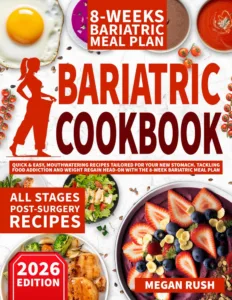
Check out the author’s book here: Bariatric Cookbook.

Leave a Reply