
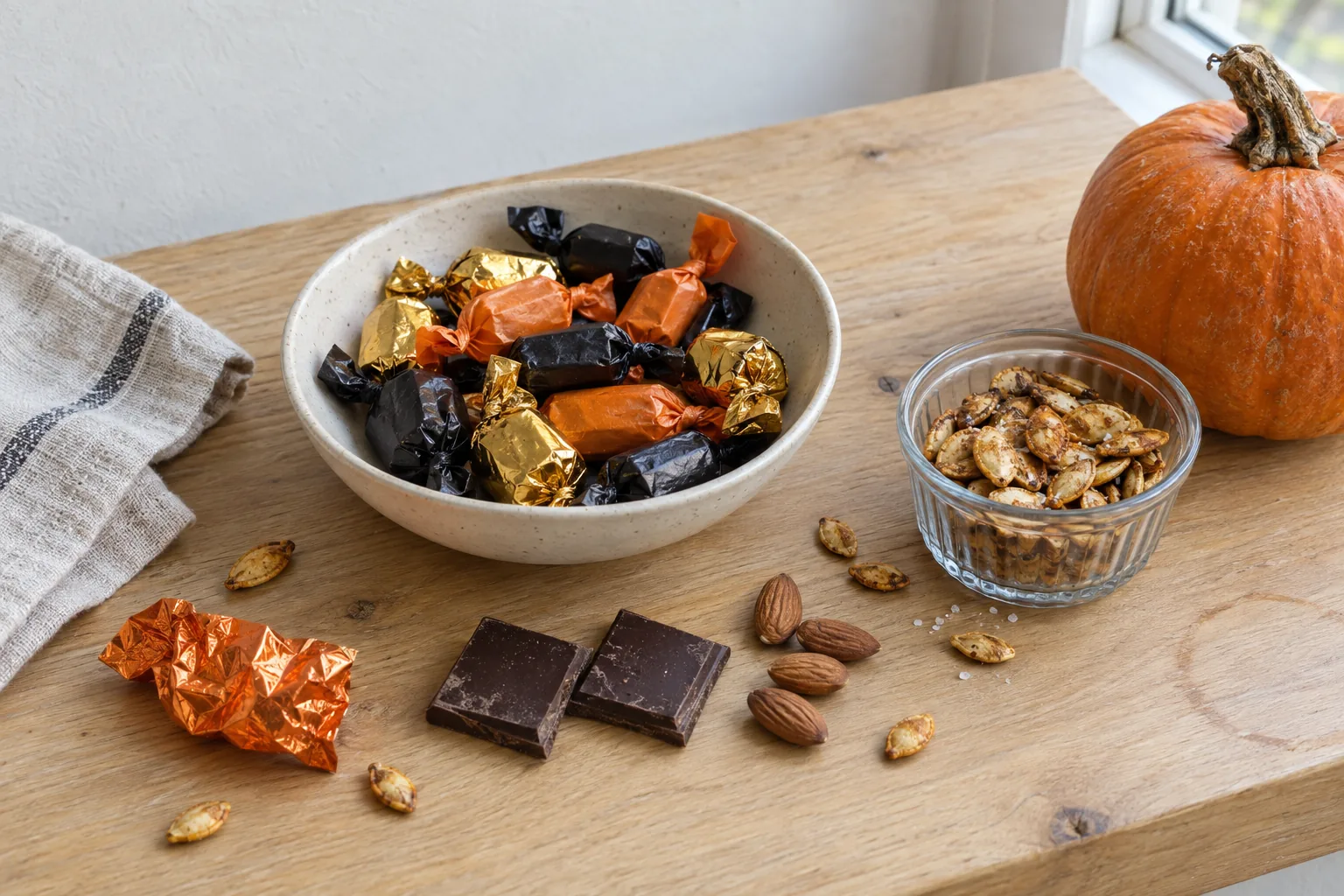
The candy aisle starts filling up in early September, and by the last week of October it feels like the whole store is orange. If you live with diabetes, that season can bring a quiet dread. Candy is everywhere, at work, at the door, in the kids’ pillowcases, and nobody seems to know what you are allowed to eat. The good news is that Halloween candy for diabetics is not a forbidden category. It is a carb count, and carb counts can be planned.
Key Takeaways
- Fun size means small, not free: most fun-size bars land between 8 and 15 grams of carbohydrate, so one or two can fit inside a planned snack.
- Chocolate and pure sugar behave differently: fat and nuts slow the rise from a chocolate bar, while gummies and hard candy hit fast.
- Sugar-free is not carb-free: many sugar-free candies use sugar alcohols that still raise glucose a little and upset the stomach a lot.
- Candy can be medicine: fast sugar is exactly what a low needs, which makes a few pieces useful in a trick-or-treat bag.
- The leftovers are the real test: the night itself is short, but a full bowl on the counter can last into December.
Why Halloween Is Harder Than It Looks
One fun-size bar is rarely the problem. The trouble is that candy on Halloween comes in handfuls, and nobody counts a handful. A bowl at the office, a few pieces while handing out treats, and a raid on the kids’ haul after bedtime can add up to a full meal of sugar.
There is also the social pressure. Halloween is built around sharing treats, and turning one down can feel like opting out of the fun. That is why a plan works better than willpower. When you already know what you will eat and when, you can enjoy the evening without doing math at the door. Think of Halloween candy for diabetics like any other carbohydrate. It has a count, a time and a place.
Halloween Candy for Diabetics: Fun-Size Carb Counts
The numbers below are approximate ranges for common types of fun-size and snack-size treats. Brands and sizes change from year to year, so always check the label on the bag you actually bought. Our guide to decoding food labels shows where to look for total carbohydrate and serving size.
| Treat | Typical portion | Approximate carbs |
|---|---|---|
| Plain milk chocolate bar | 1 fun-size bar | 8 to 9 g |
| Chocolate bar with caramel and nougat | 1 fun-size bar | 10 to 12 g |
| Peanut butter cup | 1 snack-size cup | 9 to 11 g |
| Candy-coated chocolates | 1 fun-size pouch | 12 to 13 g |
| Fruit chews or gummies | 1 fun-size pouch | 13 to 15 g |
| Lollipop | 1 small pop | 5 to 6 g |
| Candy corn | 10 pieces | 18 to 19 g |
| Raisins | 1 mini box | about 11 g |
| Pretzels | 1 snack bag | 10 to 12 g |
If you already count carbs at meals, these numbers slot right into the system you use. Our post on carb counting made simple covers the basics. The American Diabetes Association guide to carb counting explains how to match carbs to your own plan.
Chocolate Versus Pure Sugar
Two treats with the same carb count can still act very differently. A chocolate bar with peanuts carries fat and a little protein, and both slow the rate at which sugar reaches your blood. Gummies, candy corn and hard candy are almost pure sugar, so they rise quickly and fall quickly.
For a planned treat, chocolate with nuts is usually the gentler pick. Dark chocolate is gentler still, since it carries less sugar per square. Our article on glycemic load vs glycemic index explains why the speed of a food matters as much as its total.
Sugar-Free Halloween Candy for Diabetics
Sugar-free candy looks like the obvious answer, but it comes with fine print. Many brands sweeten with sugar alcohols such as maltitol, which still raise blood sugar somewhat. They also cause bloating and diarrhea when you eat more than a few pieces. That is not how anyone wants to spend a holiday evening.
Sugar-free Halloween candy for diabetics works best in small amounts, and it deserves a careful look at the label. Our comparison of sugar alternatives shows which sweeteners behave well and which ones disappoint. For counting purposes, our post on net carbs for diabetics explains how to handle the numbers on the package.
Building a Candy Plan for the Night
A plan does not need to be strict. It just needs to exist before the first doorbell rings. Decide how many treats you want, pick them out, and set them aside so the rest of the bowl belongs to the neighborhood.
Eat Dinner Before the Doorbell Starts
Candy on an empty stomach produces the sharpest spike. A real dinner with protein and vegetables, eaten before the evening gets busy, changes the picture. Afterward, a couple of treats as dessert behave far better than the same treats eaten alone.
Order matters here too. Our piece on food order and blood sugar explains why protein and vegetables first can flatten the curve of whatever comes after.
Choosing Halloween Candy for Diabetics at the Store
What you buy for the door shapes what you end up eating. Many people deliberately buy candy they do not love, so the bowl holds less temptation. Others skip candy altogether and hand out stickers, glow sticks or small toys, which families with allergies appreciate too.
If you do buy candy, buy it late in October rather than in September. A bag that sits in the pantry for six weeks has a way of disappearing long before the thirty-first. The best Halloween candy for diabetics is often the bag you buy on the twenty-ninth.
The Walk Counts
Trick-or-treating is one of the longest walks many families take all year. That walk helps your muscles pull glucose out of your blood, as our guide on the post-meal walk and blood sugar describes. Walk with the kids instead of waiting in the car, and the evening works in your favor.
Keep in mind that a long evening walk can also push glucose lower overnight. If that happens to you, our article on blood sugar drops at night covers the warning signs and a sensible bedtime routine.
Halloween Candy for Diabetics in a Family With Kids
When a child lives with type 1 diabetes, Halloween does not need to be canceled. Most families let the child trick-or-treat like everyone else and then sort the haul together at home. Each treat gets a carb count, which turns the pile into a practical lesson in reading labels.
Some families trade most of the candy for a toy, a book or an outing. Others keep a set number of treats for lunches and desserts in the weeks ahead. The child’s diabetes team can help you decide how candy fits into the insulin plan, since that part is individual.
Halloween Candy for Diabetics as a Low Treatment
Here is the part people forget: fast sugar is exactly what a low calls for. Hard candy, gummies and fruit chews raise glucose quickly because they contain almost no fat. That makes a few pieces of Halloween candy for diabetics a useful thing to keep in a pocket or a backpack.
Chocolate is the wrong choice for a low, because the fat slows the sugar down just when you need speed. The American Diabetes Association page on hypoglycemia explains how to recognize and treat a low. Follow the specific plan your own care team gave you.
A Homemade Treat: Air Fryer Pumpkin Seeds
If you carve a pumpkin, the seeds are a free snack with real fiber and protein. They crunch like candy corn never will, and a handful barely registers on the meter.
| Ingredient | Amount |
|---|---|
| Fresh pumpkin seeds, rinsed and dried | 1 cup |
| Olive oil | 1 tsp |
| Salt | 1/4 tsp |
| Cinnamon or smoked paprika | 1/2 tsp |
Pull the stringy pulp off the seeds and pat them completely dry with a towel. Toss them with the oil, salt and spice. Air fry at 350°F for twelve to fifteen minutes, shaking the basket every five minutes, until they turn golden and crisp. Let them cool on a plate, since they crisp up further as they rest.
For more crunchy ideas, our list of crunchy diabetic snacks has options you can keep in the pantry all year. Meanwhile, if chocolate is the treat you miss most, our answer to is dark chocolate good for diabetics covers the sweet side.
What to Do With the Leftovers
November 1 is when Halloween candy quietly becomes a problem. A half-full bowl on the counter invites a piece every time you walk past. Put the leftovers out of sight, or freeze the chocolate, which slows down the casual grabbing.
Another option is to portion the leftovers right away. Put two treats in each small bag and count each bag as one planned snack. Many dentists and community groups also run candy buy-back drives in early November and send the candy to troops overseas.
Keep a few pieces of hard candy for lows, and let the rest go. The NIDDK guidance on healthy living with diabetes makes the same point in plainer terms: steady habits matter more than any single night.
Frequently Asked Questions
How many pieces of candy can a diabetic eat on Halloween?
There is no single number, because it depends on your meal plan and your medication. Many people fit one or two fun-size treats into a planned snack or dessert. Check your meter two hours later to see how your body handled it.
Is dark chocolate better than milk chocolate for diabetes?
Usually, yes. Dark chocolate with a high cocoa percentage carries less sugar and more fat, so it tends to raise glucose more slowly. Portion still matters, so stick to a square or two.
Can I use Halloween candy to treat a low?
Yes, if it is fast sugar such as hard candy, gummies or fruit chews. Avoid chocolate for a low, because the fat delays the sugar. Follow the treatment plan your care team gave you.
Are sugar-free candies safe for kids with diabetes?
They are safe in small amounts, but sugar alcohols can cause stomach upset in children quickly. Regular candy, counted and covered in the insulin plan, is often the simpler choice.
A Night That Belongs to You Too
Halloween is one evening, and it should feel like a celebration rather than a test. Know your numbers, pick your treats, and eat a real dinner before the doorbell starts. Then walk the neighborhood, enjoy the costumes, and keep a little fast sugar in your pocket.
Halloween candy for diabetics comes down to the same skills you use every other day of the year. You count it, you time it, and you decide how it fits. That is not restriction. It is simply how you get to join the fun.
Check out the author’s book here: Diabetic Air Fryer Cookbook.


Leave a Reply