
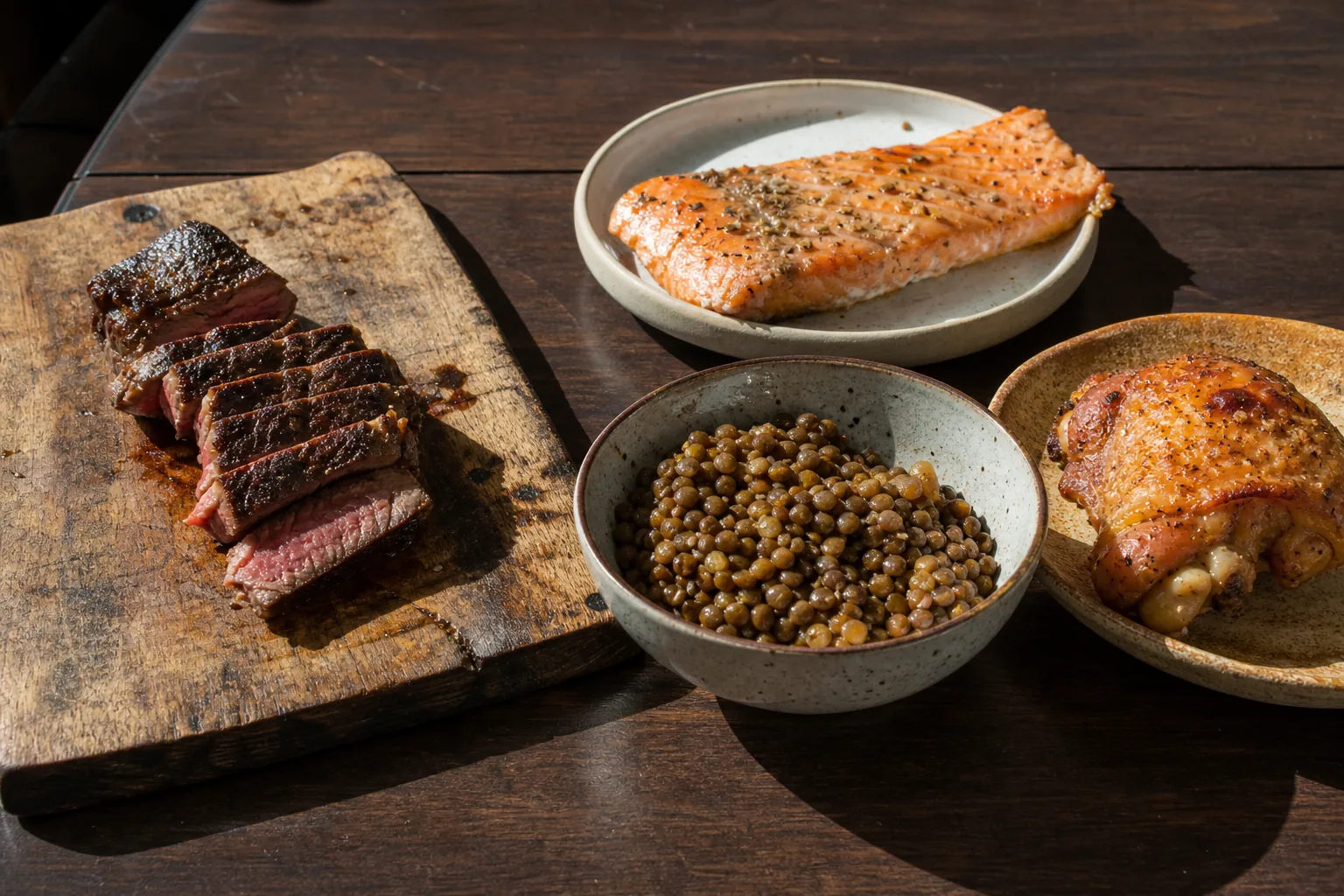
You have had one flare, maybe two, and now every dinner comes with a question. Is the burger the problem? Should the Sunday roast go for good? The link between red meat and diverticulitis is one of the better studied parts of the diverticular diet, and the answer is more useful than a flat ban. It points to how much you eat, which kind of meat, and what you put in its place.
This guide walks through what large studies found, why red meat may matter to the colon, and how to cut back without giving up the meals you enjoy. It offers general guidance only. If you are in the middle of a flare, your doctor decides what you eat, and that plan comes first.
Key Takeaways
| What you will learn | Why it helps |
|---|---|
| What the largest study found | The men who ate the most red meat had a 58% higher risk of diverticulitis |
| Where the risk levels off | The rise flattened after about six servings a week |
| Which proteins did not raise risk | Poultry and fish showed no link with diverticulitis |
| How much one swap matters | Trading one daily serving of red meat was tied to 20% lower risk |
| How to eat meat after a flare | Small, lean, well-cooked portions fit once your doctor allows solids |
Red Meat and Diverticulitis: What the Research Found
The key evidence comes from the Health Professionals Follow-Up Study, a long-running cohort of American men. A 2018 analysis in the journal Gut followed 46,461 men from 1986 to 2012 and recorded 764 new cases of diverticulitis.
Men in the top fifth for total red meat intake had a 58% higher risk than men in the bottom fifth. However, the rise was not a straight line. It climbed until about six servings a week and then leveled off, so the difference showed up mainly between low and moderate intake.
Unprocessed Meat Showed the Stronger Link
The surprise was in the type of meat. Unprocessed red meat, such as steak, roast beef, pork chops and hamburger, carried a 51% higher risk in the top group. Processed red meat, such as bacon, sausage and deli slices, showed almost no link in this study. Nobody is sure why, and the authors did not claim that processed meat is safe. It remains a poor choice for heart health and colon cancer risk, so it still belongs on the short list.
Poultry and Fish Did Not Raise Risk
Chicken, turkey and fish told a different story. Eating more of them was not linked with diverticulitis at all. Better still, replacing one daily serving of unprocessed red meat with poultry or fish was tied to a 20% lower risk. That single finding turns a scary statistic into a practical plan.
The Wider Diet Pattern
A second analysis of the same men, published in Gastroenterology, looked at whole eating patterns. The Western diet, high in red meat, refined grains and high-fat dairy, carried a 55% higher risk. By contrast, a prudent diet, rich in fruit, vegetables and whole grains, was linked to a 26% lower risk. According to the authors, most of the difference came from two things: fiber and red meat.
What These Studies Cannot Tell Us
Both studies followed men, mostly white health professionals, so the results may not apply equally to everyone. They are also observational, which means they show a link rather than proof of cause. Men who eat a lot of steak may differ in other ways, even after careful adjustment. Still, the pattern is consistent, and swapping some red meat for fish or beans carries little downside.
Why Red Meat May Affect Your Colon
Researchers are still working out the reasons, and several ideas are on the table. One involves the gut microbiome. Diets heavy in red meat seem to shift the bacteria in the colon toward types that promote inflammation, and inflammation is at the heart of every flare.
Another idea is simple displacement. When a large steak fills the plate, there is less room for beans, vegetables and whole grains. Those foods bring the fiber that keeps stool soft and pressure in the colon low. Our guide to soluble vs insoluble fiber explains how each type helps.
The way meat is cooked may play a part too. Very high heat, such as grilling over flames or charring, creates compounds that can irritate the gut lining. That is one more reason to favor gentle methods.
How Much Red Meat Is Too Much?
No study sets a safe limit for diverticular disease. The data do suggest that the steepest rise in risk came before six servings a week. For most people, keeping red meat to one or two modest servings a week, with fish, poultry, eggs and beans on the other days, is a reasonable goal.
A serving is smaller than many restaurant portions. About three ounces of cooked meat, roughly the size of a deck of cards, counts as one. A 10-ounce steak is more than three servings in a single meal.
Red Meat and Diverticulitis After a Flare
During an acute flare, your doctor may prescribe clear liquids and then soft, low-fiber food for a few days. The NIDDK guide to eating for diverticular disease describes this short-term approach and notes that most people do not need to avoid specific foods over the long term.
When solids return, lean protein that is soft and moist sits best. Tender poached chicken, flaky fish and soft eggs are easier than a tough, chewy cut of beef. Our answer to can you eat eggs with diverticulitis covers one of the gentlest options. Red meat can come back later, in small, tender, well-cooked portions, once your doctor is happy with your recovery.
Smarter Swaps for Everyday Meals
Cutting back works best when the new meal is just as satisfying. These swaps keep dinner familiar while easing the load on your colon.
| Instead of | Try | Why it helps |
|---|---|---|
| Steak night | Baked or grilled salmon | Fish showed no link with diverticulitis |
| Beef chili | Chili made with half lentils or beans | Adds fiber and halves the red meat |
| Hamburger | Turkey or chicken burger | Poultry was not linked to higher risk |
| Pot roast | Braised chicken thighs with root vegetables | Tender, moist and easy to portion |
| Meat-heavy pasta sauce | Sauce with mushrooms and a little ground beef | Keeps the flavor with less meat |
Fish and Seafood
Fish is the simplest swap, and fatty fish brings omega-3 fats as a bonus. Our Mediterranean grilled salmon is a weeknight dinner that feels special without much work.
Beans and Lentils
Legumes add protein and fiber in the same bite, which matters because fiber was the other half of the risk story. Start slowly if your gut is sensitive, and drink more water as you add them. A bowl of hearty lentil soup is a gentle way to begin.
Poultry
Chicken and turkey fit almost any recipe that calls for beef. Thighs stay moist and tender, which helps if chewing tough meat bothers you. Our air fryer chicken comes out crisp with very little oil.
Enjoying Red Meat Without Worry
You do not have to give up red meat entirely. A few habits help when it is on the menu:
- Keep the portion small: make meat a side, not the center of the plate.
- Choose lean cuts: sirloin, tenderloin and lean ground beef carry less fat.
- Cook gently: braise, stew or roast at moderate heat, and avoid charring.
- Add fiber on the side: cooked vegetables, a whole-grain roll or a bean salad.
- Watch your own response: a food journal shows whether heavy meals affect you.
Red meat is only one piece of the puzzle. Low fiber, inactivity, smoking and some painkillers matter too, so it helps to see the full list of what causes diverticulitis flare-ups. For a week of balanced meals, our diverticulitis diet plan puts the swaps in order.
Fiber deserves the last word here, because it was the other half of the risk story in both studies. Each time red meat leaves the plate, something with fiber can take its place: a scoop of beans, a side of cooked greens, a slice of whole-grain bread or a piece of fruit. Over a few months those small trades add up to a very different diet. You can stock your pantry with high fiber foods for diverticulosis prevention so the healthier choice is always within reach.
Frequently Asked Questions
Does red meat cause diverticulitis?
Research links high red meat intake with a higher risk, but it does not prove cause. In one large study, men who ate the most red meat had a 58% higher risk than those who ate the least.
Can I eat red meat with diverticulitis?
Many people can, in small portions and not every day. During a flare, follow your doctor’s plan, which usually starts with liquids and soft foods. Add red meat back later, lean and well cooked.
Is chicken better than beef for diverticulitis?
The research suggests so. Poultry and fish showed no link with diverticulitis. Replacing one daily serving of red meat with poultry or fish was tied to a 20% lower risk.
Is processed meat safer than steak for diverticulitis?
Not really. Processed meat showed a weaker link in one study, but it raises other health risks. Keep bacon, sausage and deli meats as occasional foods.
A Lighter Plate for a Calmer Colon
The research on red meat and diverticulitis offers a clear, hopeful message. You do not need to fear every burger, but eating less red meat and more fish, poultry, beans and fiber may lower your risk of another flare. Make one swap this week, see how you feel, and talk with your doctor or dietitian about a plan that fits your health as a whole.
Check out the author’s book here: Diverticulitis Cookbook.

Leave a Reply