
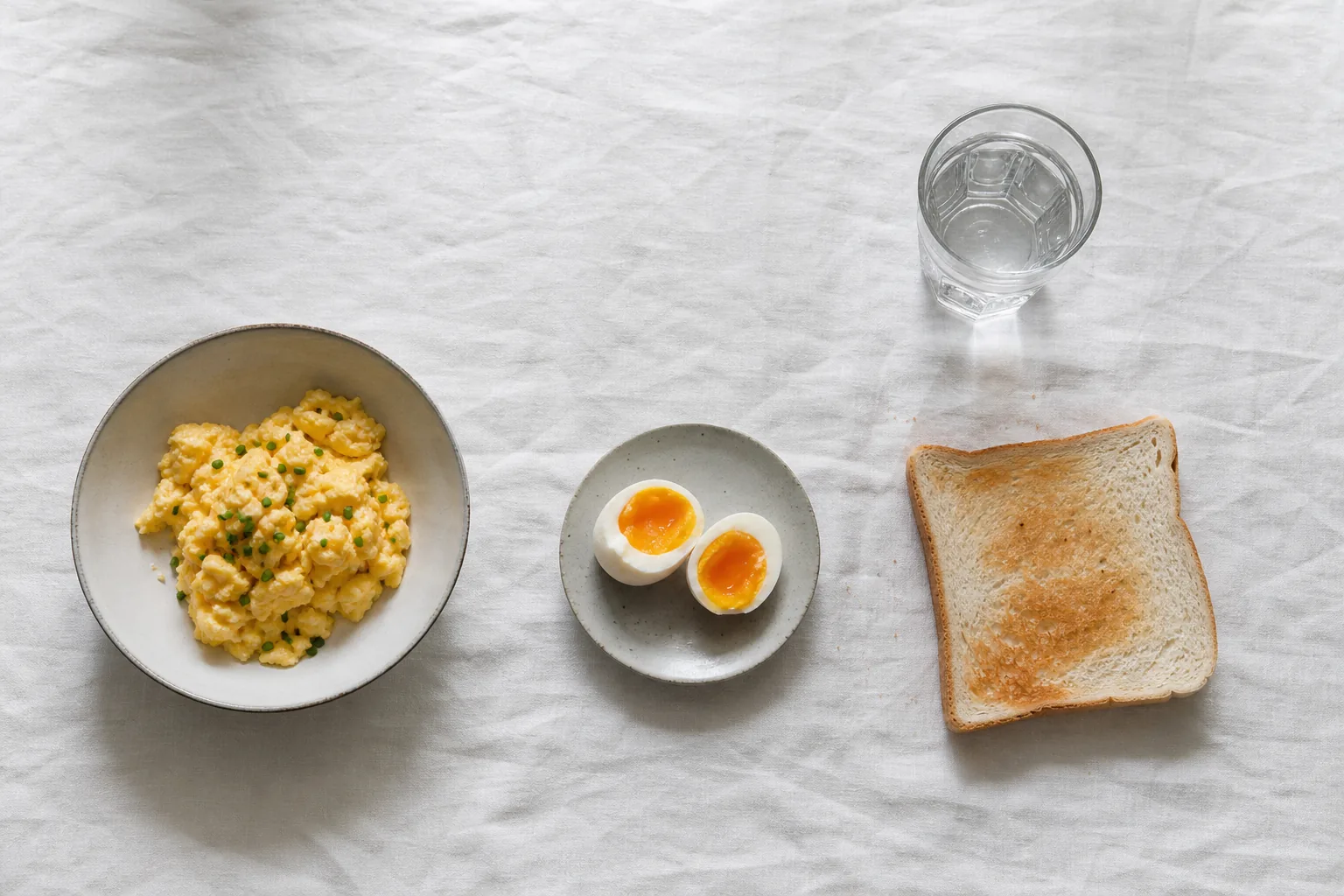
The worst of the flare is behind you, and your doctor has said you can start eating real food again. Then you open the fridge, see a carton of eggs, and wonder whether they will help or hurt. So, can you eat eggs with diverticulitis? For most people the answer is yes, and eggs are one of the kindest foods for a healing colon. This guide explains why, when they fit, and how to cook them so they stay gentle.
There is one honest caveat to state at the start. No large study has tested eggs and diverticulitis directly, so the advice here comes from how eggs behave in the gut and from what health agencies say about the diet as a whole. Your doctor still decides when you move from one stage of recovery to the next.
Key Takeaways
| What you will learn | Why it helps |
|---|---|
| Why eggs are gentle on the colon | They contain no fiber and leave very little residue |
| When eggs fit during recovery | Not on clear liquids, but often early in the soft-food stage |
| How eggs compare with red meat | Research links red meat, not poultry or fish, to higher risk |
| How to cook them for a sensitive gut | Soft, moist methods work better than frying |
| What to pair them with later | Eggs work well next to the fiber your colon needs long term |
Can You Eat Eggs With Diverticulitis? The Short Answer
Yes, in most cases, as long as you match them to your stage of recovery. The National Institute of Diabetes and Digestive and Kidney Diseases notes that most people with diverticular disease do not need to avoid any specific food. Its page on eating, diet and nutrition for diverticular disease also explains that doctors may prescribe a short liquid or low-fiber diet during a flare.
Eggs fit that picture well. They are soft, easy to chew and quick to digest, and they bring protein when appetite is low. However, they are not a treatment, and they do not prevent the next flare on their own. Their job is simpler: they give you a safe, filling meal while the colon heals.
Why Eggs Are Gentle on a Healing Colon
Diverticulitis happens when small pouches in the wall of the colon become inflamed or infected. While the tissue is sore, the colon does less painful work when meals leave little behind. That is why doctors often ask for low-fiber, low-residue food in the first days of eating again.
No Fiber and Very Little Residue
An egg contains no dietary fiber at all. Once digested, it leaves almost nothing for the colon to move along, which is exactly what a sore gut needs. For comparison, whole grains, raw vegetables and beans all add bulk, which is healthy later but harder work during recovery. Our guide to soluble vs insoluble fiber explains how each type behaves in the gut.
Complete Protein When Appetite Is Low
A large egg brings about six grams of high-quality protein in a small, soft package. After a flare, many people eat little, and the body still needs protein to repair tissue and keep up strength. Two soft eggs can cover a good share of a light meal without stretching the stomach. They are also cheap, quick to cook and easy to portion, which matters when you feel tired.
Eggs Through the Stages of Recovery
Recovery usually moves in steps, and eggs belong to some of them but not all. The table below shows where they typically fit, although your own plan comes from your doctor.
| Stage | Are eggs on the menu? | Best way to serve them |
|---|---|---|
| Clear liquids | No, only clear fluids at this point | Not yet |
| Soft, low-fiber foods | Usually yes, once your doctor allows solids | Soft scrambled, poached or soft-boiled |
| Fiber returns | Yes, as part of balanced meals | With vegetables, whole grains or fruit |
| Long-term eating | Yes, alongside a high-fiber diet | Any gentle method you enjoy |
During the Clear Liquid Days
In the first days of a flare, your doctor may ask for clear liquids only. Eggs are a solid food, so they wait until that stage ends. Broth, clear juice and gelatin carry you through instead. Our guide to the clear liquid diet for diverticulitis lists what counts as clear and what does not.
Can You Eat Eggs With Diverticulitis in the Soft-Food Stage?
This is where eggs shine. When your doctor moves you to low-fiber foods, soft eggs are often one of the first proteins to return. They sit well next to white toast, plain rice or a peeled, well-cooked carrot. The diverticulitis stage 1 diet walks through that move from liquid to soft food, step by step.
For more dishes in this phase, our collection of low-fiber recipes for diverticulitis offers a full menu around eggs, fish and tender poultry. Keep portions small and meals frequent, because a lighter load is easier on a colon that is still healing.
When Fiber Comes Back
After you have been free of symptoms for a while, your doctor or dietitian will guide you back toward fiber. The NIDDK recommends about 14 grams of fiber for every 1,000 calories, or 28 grams on a 2,000-calorie day. Eggs cannot supply any of that, so this is where they change role. They stop being the whole meal and become the protein next to the fiber.
A spinach omelet, eggs on whole-grain toast or a boiled egg next to a pear are simple ways to build that bridge. Our ideas for a high fiber breakfast for diverticulitis show how to plan these mornings. The weekly structure lives in our diverticulitis diet plan.
How Eggs Compare With Other Proteins
Protein choice matters more than many people expect. A large study in the journal Gut followed 46,461 men for decades and recorded 764 cases of diverticulitis. The men who ate the most red meat had a 58% higher risk than those who ate the least. By contrast, poultry and fish showed no link with diverticulitis.
That study focused on meat, so it tells us nothing direct about eggs. Still, it suggests that the protein on your plate is worth choosing with care. Eggs, fish, skinless poultry and tofu are all gentle, low-residue options for the soft-food stage. Red meat and processed meats, such as bacon and sausage, are better kept for smaller, occasional portions later on.
How to Cook Eggs for a Sensitive Gut
The cooking method changes how an egg feels in the gut. Gentle, moist heat keeps eggs tender, while lots of oil or butter can make them heavy. These methods work well during recovery.
- Soft scrambled: cook over low heat with a splash of milk or water, and stop while they still look glossy.
- Poached: simmer in water with a drop of vinegar for three to four minutes, then serve on white toast.
- Soft-boiled: boil for six to seven minutes for a set white and a jammy yolk.
- Baked egg bites: blend eggs with a little cottage cheese and bake in a muffin tin. Our air fryer egg bites recipe uses the same idea.
What to Leave Out at First
Hot sauce, chili flakes and heavy black pepper can irritate a gut that is still settling. Likewise, cheese in large amounts and greasy fried eggs add fat that some people handle poorly after a flare. Seeds and raw vegetables in an omelet wait for the fiber stage. Plain salt, fresh chives and a little dill keep eggs tasty without asking too much of the colon.
Cooking Ahead for Tired Days
Recovery leaves little energy for the stove. Hard-boiled eggs keep in the fridge for about a week in their shells, and egg bites freeze well. Our guide to diverticulitis meal prep shows how to cook gentle food once and eat it for days.
When Eggs Might Not Agree With You
Eggs suit most people, but not everyone. An egg allergy or intolerance calls for other proteins, such as fish, tofu or skinless chicken. Some people notice gas or discomfort after very rich egg dishes, usually because of the added fat rather than the egg itself.
A simple food journal helps you tell the difference. Write down what you ate, how it was cooked, and how you felt a few hours later. Patterns show up within a week or two, and they give your doctor something useful to look at. If pain, fever or changes in bowel habits return, call your doctor rather than blaming a single food.
According to the Cleveland Clinic, about one in five people who have had diverticulitis will have it again. Diet is one part of lowering that chance, so it helps to know the full list of what causes diverticulitis flare-ups.
Frequently Asked Questions
Can you eat eggs with diverticulitis during a flare?
Not during the clear liquid days, because eggs are a solid food. Once your doctor allows soft, low-fiber foods, soft scrambled or poached eggs are usually among the first proteins to return.
Are scrambled eggs good for diverticulitis?
Yes, when they are cooked gently over low heat with little fat. They are soft, easy to digest and contain no fiber, which suits the early soft-food stage.
How many eggs can I eat with diverticulitis?
No study sets a limit for diverticular disease. For most people, one or two eggs at a meal is a sensible portion. If you have high cholesterol or heart disease, ask your doctor what fits your own plan.
Are eggs a good protein for diverticulosis?
Yes. They are a gentle, low-residue protein that works well next to high-fiber foods. Pair them with vegetables, whole grains or fruit to support long-term colon health.
Eggs as a Bridge Back to Normal Eating
Eggs are one of the easiest foods to trust after a diverticulitis flare. They bring protein without fiber, they cook in minutes, and they adapt to every stage once solids return. Start soft and simple, then let them move to the side of the plate as fiber comes back. Above all, follow your doctor on the timing, and enjoy the small comfort of a warm breakfast again.
Check out the author’s book here: Diverticulitis Cookbook.

Leave a Reply