

A flare arrives without warning, and the kitchen suddenly feels like the last place you want to stand. You know which foods hurt, however cooking them safely takes energy that pain has already spent. Diverticulitis meal prep answers that problem on a calm Sunday instead of a painful Tuesday night. The containers decide dinner for you, and your colon gets the rest it has been asking for.
Key Takeaways
- Diverticulitis meal prep removes the decision from the hour when you feel worst.
- Each dietary phase needs its own containers, because clear liquids and brown rice never share a week.
- Broth, white rice and shredded chicken form the backbone of a flare-safe fridge.
- Fiber comes back slowly, therefore one new food at a time tells you what your gut accepts.
- A food and symptom journal finds your personal triggers faster than any published list.
- Labels with dates keep the freezer honest, since a mystery container helps nobody.
Why Diverticulitis Meal Prep Starts With the Diet
Diverticulitis begins when small pouches in the colon wall, called diverticula, become inflamed or infected. The causes vary between people, yet food shapes both the flare and the recovery that follows. Giving the colon less work to do is the whole strategy, and your plate controls that workload directly.
Care usually moves through stages, since an inflamed colon and a healing one want different things. A flare often starts with clear liquids, then low-fiber foods, and finally a gradual return to fiber. The NIDDK explains how a high-fiber diet helps prevent future attacks once the inflammation settles. Your doctor sets the timing of each phase, however, because only they can see your scans and bloodwork.
What Diverticulitis Meal Prep Actually Buys You
Diverticulitis meal prep does more than save an hour, and the benefits compound during a bad week.
- Less decision fatigue. Pain narrows your patience, therefore a ready container beats a recipe search every time.
- Fewer accidental triggers. An unprepared fridge pushes you toward whatever is fast, which is rarely gentle.
- Portion control without effort. Overeating strains a sore colon, so single servings settle the question in advance.
- Time and energy saved. Two hours on Sunday buys back five evenings, which matters most when fatigue lingers.
Setting Up Your Kitchen for Diverticulitis Meal Prep
A few tools carry most of the work, and none of them need to be expensive.
- Airtight containers. Glass or BPA-free plastic in several sizes holds single meals and prepped components.
- A reliable blender. Smoothies, soups and purees all depend on it during the liquid and low-fiber phases.
- A slow cooker or pressure cooker. Both turn lean protein tender with almost no attention from you.
- A fine-mesh sieve. Straining seeds from juice or pulp from soup keeps a low-residue meal genuinely low-residue.
- Baking sheets and parchment. Roasting vegetables and protein needs very little oil this way.
Label every lid with the food and the date, because a freezer without dates becomes a guessing game. Stack the containers by phase as well, so a flare never sends you digging behind the high-fiber meals.
Stocking the Pantry for Both Phases
Your shelves have to serve two different weeks, since a flare and a calm month ask for opposite foods.
For a flare-up, low-fiber staples:
- Canned or well-cooked fruit without skins or seeds, such as peaches, pears and applesauce
- Canned or well-cooked vegetables without skins or seeds, such as carrots, green beans and spinach
- White rice, white pasta and white bread
- Refined, low-sugar cereals like cream of wheat or rice crispies
- Lean protein: chicken breast, turkey, fish and eggs
- Plain yogurt and kefir
- Clear broths, whether bone, chicken or vegetable
- Unsweetened gelatin
For prevention, high-fiber foods added slowly:
- Whole grains such as oats, quinoa, brown rice and whole-wheat bread
- Legumes such as lentils, chickpeas and black beans
- Fruit with skins, including apples and pears, plus berries
- A wide variety of vegetables
- Nuts and seeds in moderation, once your doctor clears them
That last line surprises many readers, and the old warning against nuts has largely fallen away. Our piece on diverticulitis and nuts walks through what changed. Our broader diverticulitis diet plan covers the food lists in more detail.
Diverticulitis Meal Prep Through the Three Phases
Diverticulitis meal prep changes shape with each phase, from the shopping list to the containers. Treat them as separate systems rather than one flexible plan.
Phase 1: Clear Liquids
During an acute flare your doctor will often ask for a few days of clear liquids, so the colon can rest. Clear means you can see through it, and that rule settles most questions at the store.
- Broth. Make a large batch of chicken, beef or vegetable broth, strain out every solid, then freeze it in single servings.
- Gelatin cups. Prepare unsweetened or low-sugar gelatin and portion it into small cups.
- Juice pops. Freeze clear juices such as apple or white grape in ice pop molds for something soothing.
Broth earns its place here, and our guide to bone broth for diverticulitis explains why it soothes so well. Our clear liquid diet guide lists what actually counts as clear.
Phase 2: Low-Fiber Foods
As symptoms improve you move to low-fiber, low-residue eating, which feeds you without overworking the gut.
- Batch-cook grains. Cook plain white rice in quantity, since it pairs with any protein all week.
- Cook lean protein. Bake or poach several chicken breasts or fish fillets, then shred the chicken for soups and bowls.
- Prepare soups. Potato and carrot soup, blended smooth, stays gentle and genuinely comforting.
- Cook vegetables. Steam or boil carrots, green beans and peeled zucchini until very tender, then mash or serve whole.
- Portion snacks. Pack plain crackers, applesauce and plain yogurt into grab-and-go sizes.
The move from liquids to soft food trips up most people, and our stage 1 diet guide maps that transition step by step.
Phase 3: Bringing Fiber Back
Once recovery holds, fiber returns gradually, and patience protects everything you gained.
- One new food at a time. Swap white rice for brown rice at a single meal, then wait and watch how you feel.
- Prep the components. Cook a batch of quinoa or lentils to spoon into meals across the week.
- Wash and chop early. Ready vegetables make a handful of fiber easy to add.
- Freeze high-fiber soups. A lentil soup freezes well and thaws into a complete dinner.
- Drink more water. Fiber needs fluid to work, therefore a marked bottle on your desk keeps the count visible.
Movement helps this phase along too, and our notes on exercise and diverticulitis cover what feels safe while you heal.
| During a flare | Between flares | |
|---|---|---|
| Fiber | As low as your team advises | Gradually increasing |
| Grains | White rice, white pasta | Oats, quinoa, brown rice |
| Vegetables | Peeled and very tender | Varied, cooked or raw |
| Fruit | Canned, no skins or seeds | Whole fruit with skins |
| Cooking method | Boiled, steamed, blended | Roasted, sauteed, raw |
| Containers | Single servings, freezer-ready | Components you combine |
A Gentle Weekly Diverticulitis Meal Prep Plan
This sample week of diverticulitis meal prep fits the low-fiber phase, when a flare has calmed but fiber still feels too soon. Adjust the portions to your appetite and to what your doctor has told you.
Prep day, Sunday:
- Cook a large batch of white rice.
- Bake 4-5 chicken breasts, then shred or dice them.
- Hard-boil 6 eggs.
- Make a large pot of clear chicken noodle soup with white pasta and well-cooked carrots.
- Steam a large bag of green beans and a bunch of carrots until very tender.
- Portion the snacks: applesauce cups, plain yogurt and saltine crackers in small bags.
Your Day-by-Day Guide
Monday
- Breakfast: 2 scrambled eggs with a slice of white toast.
- Lunch: 2 cups of pre-made chicken noodle soup.
- Dinner: 1 baked fish fillet, tilapia or cod, with 1 cup of white rice and steamed green beans.
Tuesday
- Breakfast: 1 cup of plain yogurt with canned peaches in juice, not heavy syrup.
- Lunch: Leftover fish, rice and green beans.
- Dinner: 1 cup of shredded chicken with mashed peeled potatoes and cooked carrots.
Wednesday
- Breakfast: 1 cup of cream of wheat made with water or milk.
- Lunch: Leftover chicken and mashed potatoes.
- Dinner: Simple pasta with a light, seedless tomato sauce and ground turkey.
Thursday
- Breakfast: 2 hard-boiled eggs from Sunday and a slice of white toast.
- Lunch: Leftover pasta with ground turkey.
- Dinner: A chicken and rice bowl with cooked spinach, canned and drained.
Friday
- Breakfast: A smoothie of plain kefir, a peeled banana and a scoop of protein powder.
- Lunch: Leftover chicken and rice bowl.
- Dinner: An omelet with finely chopped cooked spinach and white toast.
Saturday
- Breakfast: 1 cup of plain yogurt with applesauce.
- Lunch: A simple stir-fry from the remaining chicken, rice and vegetables, with minimal oil.
- Dinner: Eat out and choose gently, for example baked fish or grilled chicken.
Sunday
- Breakfast: Cream of wheat or scrambled eggs.
- Lunch: Finish whatever the week left behind.
- Dinner: A turkey sandwich on white bread before next week’s prep begins.
Snacks, one or two a day as needed:
- An applesauce cup
- A handful of saltine crackers
- A cup of plain yogurt
- A gelatin cup
- A hard-boiled egg
Saturday’s restaurant meal deserves a little planning, because menus hide fiber and spice in unexpected places. Our guide to eating out with diverticulitis covers the questions worth asking your server.
Common Diverticulitis Meal Prep Mistakes
Even good diverticulitis meal prep slips, and the same few errors show up again and again.
- Prepping a whole week of one phase. Symptoms shift, therefore three days of food gives you room to change course.
- Forgetting the freezer. Flare food keeps for months frozen, so a stocked freezer rescues your worst evenings.
- Reintroducing fiber too fast. Two new foods at once tells you nothing when discomfort follows.
- Skipping the journal. Memory blurs by Sunday, however a one-line note takes seconds at the table.
- Ignoring drinks. Coffee affects people differently, and our piece on coffee with diverticulitis sorts the evidence out.
Frequently Asked Questions
How long can I keep prepped diverticulitis meals?
Cooked chicken, rice and vegetables hold three to four days in the fridge, and soups freeze for months. Label the lids, because a frozen container stops looking familiar after a week.
Can I meal prep during an active flare?
Broth, gelatin and juice pops need almost no standing time, so most people manage them between waves of pain. Mayo Clinic notes that treatment for a flare often starts with rest and a liquid diet, therefore your prep list stays short.
Should I prep low-fiber food even when I feel fine?
Keeping a few flare-safe meals frozen costs one extra hour a month. Our list of common flare-up triggers explains why a flare rarely announces itself in advance.
How do I find my own trigger foods?
Write down what you eat and how you feel two hours later, then read the notes weekly rather than daily. Patterns emerge over a month, and our guide to diverticulitis flare-ups gives you a starting shortlist.
Cooking Ahead So You Can Rest
Diverticulitis meal prep works because it moves the hard decisions to the hour when you feel strongest. Stock the pantry for both phases, cook components rather than finished plates, and label what you freeze. Reintroduce fiber one food at a time, and let the journal rather than the internet tell you what your gut accepts.
The food itself can still taste like something you want, which matters more than any list of rules. A tender chicken breast, a bowl of real broth and a bright spoon of applesauce make a decent dinner in anybody’s kitchen.
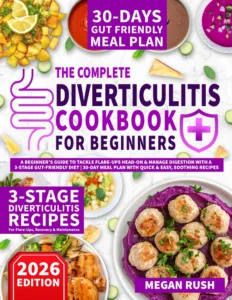
Check out the author’s book here: Diverticulitis Cookbook.

Leave a Reply