

A colonoscopy report that mentions small pouches in your colon rarely comes with much explanation. You leave with a word you have never said out loud, diverticulosis, and no sense of what to do next. The good news arrives quickly, because High Fiber Foods for Diverticulosis Prevention do most of the protective work on their own.
The old advice told people to avoid seeds, nuts and popcorn forever. Today the picture looks almost opposite, and the kitchen matters far more than the avoidance list ever did.
Key Takeaways
- Two different conditions: diverticulosis means the pouches exist, while diverticulitis means they have become inflamed.
- Pressure forms pouches: hard stools force the colon to strain, and that strain pushes the wall outward.
- Aim for 25 to 38 grams: women need about 25 grams of fiber daily, men about 38.
- Add it slowly: one new high-fiber food every two or three days keeps the bloating away.
- Water is not optional: fiber without enough liquid makes constipation worse rather than better.
Diverticulosis and Diverticulitis Are Not the Same Thing
The two words sit one letter apart, however they describe very different situations, and getting them straight saves a lot of unnecessary worry.
Diverticulosis simply means the pouches are present in the lining of your colon. They affect over half of all Americans past age 60, and most people carry them without a single symptom. A routine colonoscopy usually finds them by accident.
Diverticulitis is the version you want to avoid, because one or more pouches become inflamed or infected. That brings severe abdominal cramps, fever, nausea and a sharp change in bowel habits. Severe cases can turn into genuine complications, therefore prevention deserves real attention.
Everything below concerns the first stage, the quiet one. The National Institute of Diabetes and Digestive and Kidney Diseases draws the same line between the two conditions, and our notes on living with diverticular disease cover the long view.
Why Fiber Protects the Colon Wall
For decades doctors believed a low-fiber diet would rest the bowel and keep trouble away. Modern evidence turned that idea around completely, and a low-fiber diet now counts as a risk factor instead.
The Pressure Problem in Plain Words
Think of the colon as a muscular tube that squeezes waste along its length. A diet low in fiber produces small, hard stools, so the tube has to squeeze much harder to move anything.
That effort raises the pressure inside, and over years the weak spots in the muscular wall bulge outward under it. Each bulge becomes a pouch, whereas fiber reverses the mechanics instead of treating a symptom.
Fiber behaves like a sponge, since it absorbs water and leaves the stool softer and bulkier. Soft, bulky stool passes without straining, therefore the pressure inside the colon drops. Lower pressure means fewer new pouches and less risk that the existing ones turn angry.
Soluble and Insoluble Fiber Each Do a Job
Most whole foods carry a mix of both types, so nobody needs to track them separately. Understanding the difference still helps when you are choosing what to cook.
Soluble fiber dissolves in water and forms a gel. It slows digestion, which helps blood sugar control, and it softens stool so passing it takes no effort. Oats, barley, apples, citrus, carrots, beans and peas all carry a good share.
Insoluble fiber does not dissolve, and it travels through largely intact. It adds bulk and sweeps the digestive tract like a broom, which is why it earns the credit for preventing constipation. Whole wheat, bran, nuts, seeds, cauliflower, green beans and fruit skins supply it generously. Our guide to soluble vs insoluble fiber goes deeper for anyone who wants the full picture.
The Best High Fiber Foods for Diverticulosis Prevention
Stocking the pantry beats memorizing rules, so here are the categories worth building meals around, brought in gradually rather than all at once.
Legumes Lead the List
Beans and lentils deliver more fiber per dollar than anything else in the store. They also bring protein, which makes them a main course rather than a side.
- Black beans: 15 grams of fiber per cooked cup, and they hold their shape in a salad.
- Lentils: 16 grams of fiber per cooked cup, ready in twenty minutes without any soaking.
- Chickpeas: 12.5 grams of fiber per cooked cup, roasted until crisp or blended until smooth.
A cup of lentils turns a thin soup into dinner, while blended chickpeas become hummus in four minutes. Canned beans work perfectly well, so rinse them and move on with your evening.
Whole Grains Worth the Swap
Refined grains have had the fiber milled out of them, which is exactly the part you want, while whole grains keep the kernel intact.
- Quinoa: 5 grams of fiber per cooked cup, plus a complete set of amino acids.
- Barley: 6 grams of fiber per cooked cup, chewy enough to carry a whole soup.
- Oats: 4 grams of fiber per half cup dry, and the soluble kind dominates here.
- Air-popped popcorn: 3.5 grams of fiber per three cups, which makes a generous evening bowl.
Oatmeal handles breakfast without any thought, and quinoa replaces rice under almost any sauce. For more morning ideas, our high fiber breakfast for diverticulitis collection starts the day properly.
Fruit With the Skin Left On
Whole fruit beats juice every time, because the skin holds much of the insoluble fiber that peeling an apple throws away.
- Raspberries: 8 grams of fiber per cup, and the frozen ones cost far less.
- Prunes: 12 grams of fiber per cup, which explains their long-standing reputation.
- Avocado: 10 grams of fiber per cup, since it counts botanically as a fruit.
- Pears with skin: 6 grams per medium fruit, so leave the peeler in the drawer.
- Apples with skin: 4.5 grams per medium fruit, and the skin carries most of it.
Vegetables, Cooked or Raw
Cooking does not destroy fiber, therefore roasted vegetables count exactly as much as a salad does, so choose whichever version you will actually eat.
- Artichoke hearts: 7 grams of fiber per cup, and the jarred ones need no work.
- Broccoli: 5 grams of fiber per cooked cup, roasted hot until the edges brown.
- Carrots: 5 grams of fiber per cup, whether you eat them raw or braised.
- Brussels sprouts: 4 grams of fiber per cooked cup, halved and seared cut side down.
High Fiber Foods for Diverticulosis Prevention: Nuts and Seeds
This group deserves its own paragraph, since it carried an undeserved ban for decades. Patients were warned that a fragment might lodge in a pouch and cause infection.
That myth has been thoroughly debunked. Large studies found no link between eating nuts, seeds or popcorn and a higher risk of diverticulitis, and some suggest these foods may even protect the colon while supplying healthy fat alongside the fiber.
- Chia seeds: 10 grams of fiber per 2 tablespoons, soaked into pudding overnight.
- Flaxseeds, ground: 4 grams of fiber per 2 tablespoons, since whole ones pass through untouched.
- Almonds: 4 grams of fiber per quarter cup, which amounts to a small handful.
If the old warning still makes you hesitate, our pieces on diverticulitis and nuts and on popcorn with diverticulosis walk through the evidence.
High Fiber Foods for Diverticulosis Prevention at a Glance
| Food | Fiber | Easiest way to use it |
|---|---|---|
| Lentils | 16 g per cooked cup | Stir into soup or stew |
| Black beans | 15 g per cooked cup | Rinse canned, add to salad |
| Prunes | 12 g per cup | Chop into oatmeal |
| Chia seeds | 10 g per 2 tablespoons | Soak in milk overnight |
| Raspberries | 8 g per cup | Eat frozen straight from the bag |
| Artichoke hearts | 7 g per cup | Jarred, drained, on anything |
| Barley | 6 g per cooked cup | Swap it in where rice goes |
Two of those rows a day cover a large share of your target. Most adults need between 25 grams of fiber daily for women and 38 grams for men, although most Americans manage less than half that.
How to Add Fiber Without the Bloating
Going from 10 grams a day to 35 overnight guarantees a miserable week. Your gut bacteria need time to change, therefore pace matters as much as quantity.
Go Slowly
Add one new high-fiber food every two or three days rather than overhauling every meal at once. Start with half a cup of beans instead of a full bowl.
That gradual pace lets the bacteria adapt, and the gas and bloating stay manageable. Our diverticulitis diet plan maps the whole shift across a week if you prefer a structure.
Water Does Half the Work
Fiber functions by absorbing water, so more fiber without more liquid produces exactly the brick-like stools you were trying to avoid.
Aim for at least eight full glasses, or 64 ounces, and often more, because pale straw-colored urine tells you the amount is working. The Mayo Clinic makes the same point about pairing fiber with fluid.
Movement and Gut Bacteria
A thirty-minute walk stimulates peristalsis, the muscular wave that moves stool along your colon, and light daily movement beats an occasional hard workout.
Fermented foods like yogurt, kefir and sauerkraut feed a healthier microbiome alongside the fiber. Research on probiotics keeps evolving, although many people find the routine helps. Knowing your own diverticulitis flare-ups matters just as much as adding the good ones.
What Changes During an Actual Flare
Here sits the exception that causes most of the confusion, and it is worth stating plainly, because everything above applies to the calm preventive stage only.
During an active flare, with real pain and fever, the advice reverses completely. Your doctor will usually start you on clear liquids to rest the bowel, then advance you slowly toward low-fiber foods as the inflammation settles. Your care team sets that timing and the pace of every step, not an article on the internet.
Once you have fully recovered, the high-fiber diet comes back gradually. Our notes on living with diverticular disease cover that return in detail.
Frequently Asked Questions
Can I really eat popcorn and seeds now? Yes, provided you are not in the middle of a flare. The old ban rested on a theory rather than evidence, and the studies since have not supported it.
How long before I notice a difference? Most people feel easier bowel movements within a week or two of steady fiber and water, although the protective effect on the colon builds over much longer.
Should I use a fiber supplement instead? Food brings vitamins and minerals that a powder cannot match. Ask your doctor or dietitian before adding a supplement, since the right amount depends on you.
Does cooking reduce the fiber in vegetables? No, cooking softens the texture without touching the fiber itself, therefore roasted, steamed and raw all count toward your daily total.
Keep It Simple, Keep It Going
Pick two fiber-rich foods you genuinely enjoy, add them this week, and drink more water while you do it. That single habit does more for your colon than any list of forbidden foods ever did.
Diverticulosis is common, quiet and manageable, and the kitchen gives you real leverage over it. Cook well, go gradually, and let the pouches stay as uneventful as they are today.
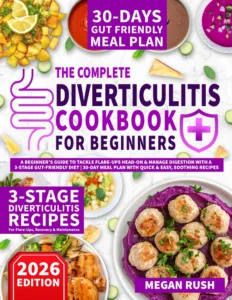
Check out the author’s book here: Diverticulitis Cookbook.

Leave a Reply