

A diagnosis of diverticular disease often arrives with a stack of worries and a single vague instruction: eat more fiber. Nobody explains how much, which kinds, or whether the popcorn bowl on movie night is gone for good. After one painful flare, many people start fearing every meal, and the kitchen turns from a comfort into a minefield. Yet living with diverticular disease long term is less about restriction and more about steady habits.
This condition sits on a spectrum, from quiet pouches in the colon wall (diverticulosis) to active inflammation (diverticulitis). Because the right plan depends on that spectrum, you need to know which stage you are managing today. Fiber matters, but so do water, movement, stress and the bacteria that live in your gut. This guide walks through each piece with the kind of detail you can use at tonight’s dinner.
Key Takeaways
- Diverticulosis and diverticulitis call for opposite eating patterns, so learn which one you are managing right now.
- A high-fiber diet protects the colon, although you build it slowly and only after a flare has fully settled.
- Water is the partner fiber cannot work without, because dry fiber turns into hard, painful stool.
- Daily movement, a healthy weight and quitting smoking lower inflammation and the risk of another flare.
- A simple food journal finds your real triggers, so you stop fearing whole food groups for no reason.
- Certain symptoms mean a call to your doctor the same day, and this article lists them plainly.
Diverticulosis vs. Diverticulitis: Know Your Stage
The words sound alike, but they describe two different situations with two different goals. Diverticulosis means small pouches have formed in the colon wall, and most people who have them never feel a thing. Diverticulitis means one or more pouches have become inflamed, and the goal shifts from prevention to rest and healing. Your doctor confirms your stage, so the table below is a kitchen guide, not a diagnosis.
| Diverticulosis (quiet pouches) | Diverticulitis (active flare) | |
|---|---|---|
| Main goal | Prevent flares and keep stool soft | Rest the colon and heal |
| Fiber | High, from whole foods, built gradually | Low or liquid, as your care team directs |
| Typical plate | Oats, beans, cooked vegetables, fruit | Broth, juice without pulp, then soft foods |
| Nuts, seeds, popcorn | Allowed unless they bother you | Avoided until the flare has settled |
| Who sets the plan | You, with your doctor’s guidance | Your doctor, with a return plan |
The most common mistake I see is staying on the low-fiber “flare diet” for months out of fear. However, a low-fiber diet often brings constipation, and a healed colon does not need that strain. Doctors once believed constipation created new pouches; larger recent studies have not confirmed it, yet fiber still keeps things regular and remains what guidelines recommend after a flare. Once your doctor confirms the flare has healed, the long-term rule is to move back toward fiber, step by step. If you are still in the early days, the stage 1 diet guide explains how liquids give way to soft foods. Meanwhile, this piece on flare-up triggers covers what usually sets one off.
Living with Diverticular Disease: The Fiber Foundation
Diet is your strongest tool, yet it works best as a list of foods to add, not to ban. Fiber adds bulk to stool and holds water in it, so stool moves through the colon more easily. The NIDDK suggests about 14 grams of fiber for every 1,000 calories you eat. For most adults, that means somewhere between 25 and 35 grams a day. Most Americans eat far less, so treat 30 grams as a goal to climb toward, not a deadline.
Soluble and Insoluble Fiber in the Kitchen
Fiber comes in two families, and your gut reacts differently to each one. Soluble fiber, found in oats, apples, beans and cooked carrots, dissolves into a soft gel that slows digestion. Insoluble fiber, found in wheat bran, kale and nuts, stays intact and adds roughage that speeds transit. When bloating is your problem, lean on soluble fiber first, because it is gentler on a sensitive colon. Soluble vs insoluble fiber goes deeper, and this list of high-fiber foods shows what fits on a real plate.
How to Add Fiber Without the Bloat
Rushing from a low-fiber diet straight to 30 grams a day is the fastest route to gas and cramps. Instead, add roughly one new fiber source each week and let your gut adjust before adding the next. Here are some easy moves that work in my kitchen.
- Stir a spoonful of oat bran into oatmeal or yogurt, because it disappears into the texture.
- Swap half the white rice in a dish for lentils, which cook in the same pot and soften completely.
- Roast or steam vegetables until tender, since cooking breaks down the tough fibers your gut struggles with.
- Keep the peel on apples and pears once your gut tolerates them, because most of the fiber lives there.
Hydration: The Partner Fiber Cannot Work Without
Fiber acts like a sponge, and a dry sponge is hard and scratchy. When you eat a high-fiber diet without enough water, the stool turns dense and constipation follows, which is exactly the discomfort you want to avoid. The familiar target of 64 to 80 ounces a day is a reasonable start, although your doctor may adjust it for your size, medications and climate. Start each morning with a tall glass before coffee, keep a bottle beside your cooking station, and count broth, herbal tea and water-rich fruit toward the total.
The Nut and Seed Myth
For decades, doctors told patients to avoid nuts, seeds, corn and popcorn, fearing that fragments lodge in the pouches. However, the NIDDK now states that research has found no evidence these foods cause flares, and their fiber actually helps. The only exception is you: if a specific food reliably bothers your gut, leave it out. Diverticulitis and nuts explains how to bring them back with confidence, one small portion at a time.
Lifestyle Habits That Protect the Colon
Your digestive tract does not work in isolation, so the rest of your body matters here too. The NIDDK lists obesity, lack of exercise and smoking among the factors that raise diverticulitis risk, and each one is something you can work on.
Move Every Day
Exercise does more than burn calories, because it mechanically stimulates the bowel. Walking, jogging, swimming and yoga all wake up peristalsis, the wave-like contractions that push food through the colon, while a sedentary life lets the whole system slow down. Thirty minutes of moderate activity on most days is the usual goal, although a brisk walk after dinner already counts. Whenever you start something new, check with your doctor first, especially if you have recently healed from a flare.
Weight and Smoking
Extra fat around the belly does more than strain the waistband. Visceral fat releases inflammatory signals that can irritate the gut. Moreover, the NIDDK names obesity as a risk factor for both diverticulitis and its complications. Smoking cuts blood flow to healing tissue in the colon and raises the risk of complications as well. Quitting is hard, yet it may be the most protective change you can make, and your doctor can point you to real support.
Gut Bacteria and Regular Bowel Habits
Emerging research links the ongoing inflammation in diverticular disease to an imbalance in gut bacteria. The science is still young, so treat this section as helpful kitchen habits rather than a treatment plan.
Fermented Foods on the Plate
Fermented foods bring live cultures to the table in a form that tastes good. Plain yogurt, kefir, sauerkraut and miso all fit on a diverticulitis-friendly plate. A spoonful of sauerkraut beside roasted chicken, or miso stirred into soup, is an easy start. Probiotic supplements are a different matter, because strains and amounts vary widely, so ask your doctor or dietitian before you add one. Your team knows your history and can tell you whether a supplement makes sense for you.
Stay Ahead of Constipation
Do not let constipation build for days, because hard stool means straining and discomfort. When a day passes without a bowel movement, drink more water, add cooked vegetables or fruit, and take a walk. If that happens often, talk to your doctor about a gentle fiber supplement or a stool softener, since the choice and the amount depend on your situation. Prevention is far easier than dealing with a blockage later.
Food Fear and the Gut-Brain Connection
Anxiety after a painful hospital stay is normal, and every twinge in the belly can feel like the next flare. The gut and brain talk constantly, so stress slows digestion and raises pain sensitivity in a very real way. Slow breathing before meals, a short walk, or a quiet cup of tea relaxes the gut, not just the mind.
A food journal is the most practical tool against food fear. Write down what you ate, roughly how much, and how you felt in the hours afterward. After a few weeks, patterns appear, and usually a couple of specific items are the problem, not whole food groups. What Causes Diverticulitis Flare-Ups: Common Triggers and Prevention Tips shows how to read your notes. Meanwhile, this one on eating out proves that a restaurant menu does not have to be scary.
Living with Diverticular Disease: When to Call the Doctor
Part of living with this condition is telling ordinary discomfort from a real emergency. Call your doctor the same day, or seek urgent care, when you notice any of these signs.
- Fever or chills, especially together with pain in the lower left belly.
- Nausea or vomiting that keeps you from holding down liquids.
- Blood in the stool, whether bright red or dark.
- Sudden, sharp pain that does not ease when you rest and stick to liquids.
- A significant change in bowel habits that lasts more than a few days without a clear reason.
Regular check-ups matter even when you feel fine. Your doctor decides how often you need a colonoscopy, both to monitor the pouches and to screen for colorectal cancer.
Frequently Asked Questions
Can I drink alcohol with diverticular disease?
Many people tolerate a glass of wine or beer during remission. However, alcohol irritates the gut lining and dehydrates you, so keep it occasional and skip it during a flare.
Should I take a fiber supplement every day?
That is a question for your doctor or dietitian. Reaching 30 grams from food alone takes effort, and a psyllium or methylcellulose supplement helps some people. However, your team should pick the product and the amount.
Does coffee cause flare-ups?
No evidence shows that coffee causes diverticulitis. Caffeine can cause cramping in some people, so watch how your gut responds; this article on coffee covers the details.
Can diverticulitis be cured?
The pouches stay unless a surgeon removes them. The inflammation, however, can heal completely, and most people keep it from returning with steady habits. Regular, comfortable bowel movements are part of that routine, and our guide to diverticulosis and constipation explains what the research says.
A Steady Plan, One Meal at a Time
Living with diverticular disease works best when you shift from “what must I avoid” to “what can I add”. Build fiber slowly, drink enough water, move every day, and keep a journal so you know your real triggers. Fermented foods, a healthy weight and a smoke-free life round out the plan, and your doctor stays in the loop for anything that involves a supplement or a new symptom.
You are not stuck with a life of plain toast. Because most people manage this condition for decades without surgery, the habits you build now give you a table full of good food and fewer worried nights. Trust the process, keep it simple, and enjoy your dinner.
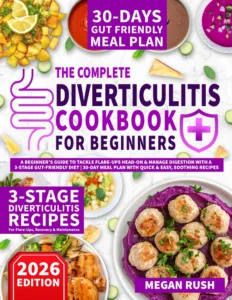
Check out the author’s book here: Diverticulitis Cookbook.

Leave a Reply