
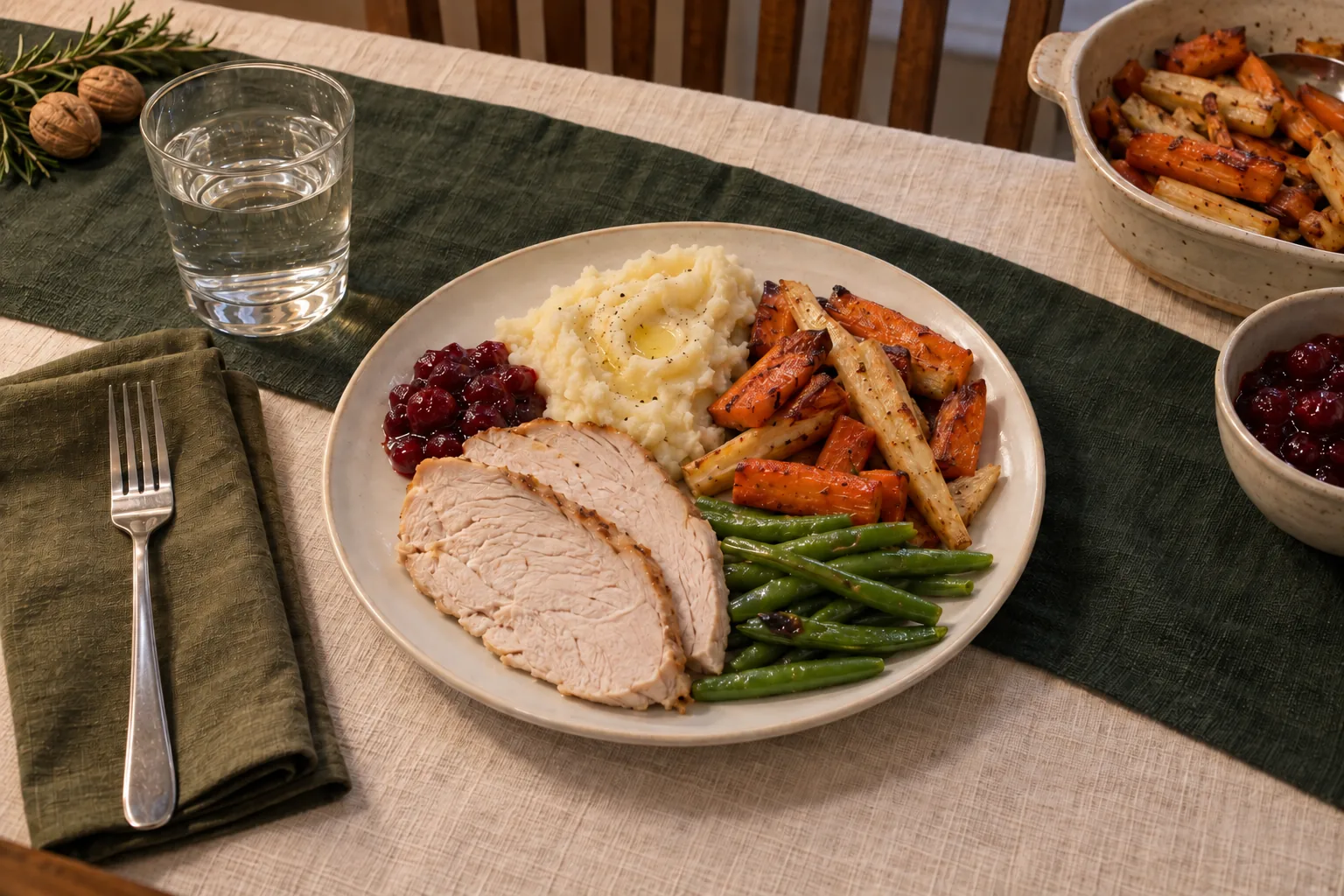
The holiday table is where most of us let our guard down. There is more food than usual, richer food than usual and a host who keeps passing the dishes around. If you live with diverticular disease, that abundance can feel more like a test than a treat. The good news is that diverticulitis holiday meals do not have to be bland, separate or sad. With a few choices made ahead of time, you can share the same feast as everyone else and wake up the next morning feeling fine. This guide is for people in remission, and your doctor or dietitian always has the final word on your own plan.
Key Takeaways
- Your stage comes first: a colon that is still healing needs a different plate from one that has been calm for months.
- Portions matter more than any single dish: one very large meal strains digestion more than a normal plate of richer food.
- Keep fiber steady: a sudden drop or a sudden jump in fiber during the holidays is what most often upsets the gut.
- Water is part of the menu: fiber works only when it has enough fluid to move with it.
- The days after count too: a walk, regular meals and your usual routine help your gut settle after a feast.
Why the Holidays Test a Sensitive Colon
However, holiday food is not dangerous in itself. The trouble is the way the season changes several habits at once. Meals get bigger and later, and the fiber in your diet tends to drop as cookies replace fruit and white rolls replace whole grains. Many people also drink less water, move less and sleep less than usual.
Each of those shifts can slow digestion and lead to constipation, which puts more pressure on the colon wall. Stress adds its own weight, since family gatherings and travel can upset the gut as much as the menu. Our guide to what causes diverticulitis flare-ups explains how these factors combine. Knowing them in advance is the first step toward calm diverticulitis holiday meals.
Know Your Stage Before You Fill a Plate
If you had a flare in the last few weeks, the holiday table is not the place to test your limits. A healing colon usually needs softer, lower-fiber food for a while. Our guide to diverticulitis diet plan walks through that gentle phase. In practice, that means white turkey meat, smooth mashed potatoes, well-cooked carrots and a bowl of broth.
If you have been in remission for months, your plate can look like everyone else’s. Most doctors now encourage a fiber-rich diet for long-term prevention, and most have dropped the old ban on seeds and nuts. The NIDDK page on eating and diet for diverticular disease sums up the current advice. The rest of this guide assumes you are in that calmer stage.
Building Diverticulitis Holiday Meals, Dish by Dish
Fortunately, good diverticulitis holiday meals start from dishes a traditional feast already contains. The trick is to fill most of the plate with those dishes and keep the heavier ones as side notes. The table below shows common holiday foods and a simple way to approach each one.
| Holiday dish | Easier choice | Why it helps |
|---|---|---|
| Roast turkey or chicken | White meat without the skin | Lean protein is easy to digest |
| Glazed ham, sausage stuffing | A small slice or skip it | Processed red meat is linked to more flares |
| Mashed potatoes | Keep the skins on if you tolerate them | Skins add fiber, butter stays moderate |
| Roasted root vegetables | Carrots, parsnips, squash | Soft, well-cooked fiber |
| Green bean casserole | Plain green beans with a little butter | Less fat and less fried topping |
| Cranberry sauce | Homemade with less sugar | Fruit fiber without a sugar load |
| Pecan pie, fruitcake | A thin slice after the meal | Rich, sweet and low in fiber |
Diverticulitis Holiday Meals for the Main Course
Poultry is the easiest main course for most people with diverticular disease. Roast turkey, chicken or a white fish are all lean and simple to digest. On the other hand, red meat and processed meat are a different story. Several large studies link a high intake to a higher risk of diverticulitis, as our guide to diverticulitis flare-ups explains. A slice of ham on Christmas Day is unlikely to cause a problem, but it should not become the center of every meal that week.
Side Dishes That Carry the Fiber
The side dishes are where you can quietly keep your fiber on track. Roasted carrots, sweet potatoes, squash and green beans all bring soluble fiber, which forms a soft gel and keeps stool easy to pass. A salad of cooked beets or lentils works well too, if your gut already handles them. Our explainer on soluble versus insoluble fiber shows which foods bring which kind.
Similarly, whole grain stuffing is a simple upgrade that most guests will not notice. Swap half the white bread for whole wheat bread and add chopped celery, onion and apple. If nuts are part of your family recipe, you do not need to pick them out. Our article on diverticulitis and nuts explains why they are usually fine in remission.
Desserts in Diverticulitis Holiday Meals
Holiday desserts are rich, sweet and usually low in fiber, so portion size is the main tool. Choose one dessert rather than a small slice of each, and eat it slowly after the meal. Baked apples, poached pears or a fruit crumble with oats give you something sweet with a little fiber in it. A pumpkin pie with a thin crust is lighter than a pecan pie loaded with syrup and butter.
Pacing Fiber Around Diverticulitis Holiday Meals
The most common holiday mistake is not a single dish. It is the slow slide from a fiber-rich routine to a diet of white bread, cookies and leftovers. After a week or two of that, many people notice constipation, bloating and discomfort. Then they overcorrect with a huge bowl of bran cereal, which brings on gas and cramps.
Instead, a steadier approach keeps diverticulitis holiday meals from turning into a week of trouble. Keep your usual breakfast through the holidays, whether that is oatmeal, whole grain toast or fruit. Our ideas for a high-fiber breakfast for diverticulitis are easy to keep going on busy mornings. If your fiber did drop, bring it back up over several days instead of all at once. For a list of the best sources, see our guide to high-fiber foods for diverticulosis prevention.
What to Drink at the Holiday Table
Water is the quiet partner of fiber, because fiber pulls fluid into the stool to keep it soft. Keep a glass of water next to your plate and refill it between courses. Warm drinks count too, and a cup of peppermint or ginger tea after dinner can ease a heavy stomach. Our guide to tea for diverticulitis lists the gentlest choices.
Coffee after dessert is fine for most people in remission, as our article on coffee with diverticulitis explains. Fizzy drinks are a different matter, since the bubbles can add to the bloating a big meal already brings. The MedlinePlus page on gas lists other common causes of that uncomfortable fullness. If you drink alcohol, keep it moderate and match every glass with a glass of water.
Hosting or Visiting Without Stress
When you host, you control the menu, which makes things easier. Cook the dishes you know you tolerate and make sure at least two sides are rich in soft vegetables. Nobody at the table needs to know you planned these diverticulitis holiday meals around your gut.
When you are a guest, a little preparation goes a long way. Offer to bring a dish, such as roasted vegetables or a fruit dessert, so you know there is something safe on the table. Eat a small snack before you leave home, so you do not arrive very hungry. If a host insists on seconds, a simple phrase like “It was wonderful, I am saving room for dessert” works without any medical detail. A restaurant meal brings its own questions, which our guide to eating out with diverticulitis covers.
Keeping Diverticulitis Holiday Meals Small and Slow
Big portions are hard on any digestive system, and a sensitive colon feels them more. Use a regular dinner plate rather than a serving platter, and fill half of it with vegetables. Also, chew slowly and put your fork down between bites. Wait fifteen minutes before deciding on seconds, since fullness takes time to reach the brain.
The Day After the Feast
What you do after a big meal matters almost as much as the meal itself. A walk of twenty or thirty minutes helps move things along and eases bloating. Our guide to exercise and diverticulitis explains why regular movement protects the colon. The next morning, return to your normal breakfast and your normal meal times.
Holiday stress deserves attention too, because tension and poor sleep can upset the gut on their own. Short breaks, a quiet walk or a few minutes of slow breathing all help. Our article on stress relief for diverticulitis has simple ideas that fit into a busy week.
Finally, know the warning signs. Pain in the lower left abdomen that does not ease, fever, chills, nausea or a change in bowel habits all need a call to your doctor. Above all, do not wait for the holidays to end before you get checked.
Frequently Asked Questions
Can I eat turkey with diverticulitis?
Yes, roast turkey is one of the best choices for diverticulitis holiday meals. White meat without the skin is lean and easy to digest. If you are recovering from a recent flare, keep the portion moderate and pair it with soft, well-cooked sides.
Is stuffing safe for diverticulitis?
Most people in remission can enjoy stuffing in a normal portion. A version made with whole grain bread and vegetables adds fiber, while a sausage stuffing brings processed meat. During a flare or right after one, your doctor may suggest a softer, lower-fiber menu for a while.
Should I avoid nuts and seeds at holiday dinners?
Current research no longer supports avoiding nuts, seeds or popcorn in remission. Many people now eat them without trouble, as our guide to popcorn with diverticulosis explains. If a specific food bothers you, trust your own experience.
What should I do if I overeat at a holiday meal?
Sip water, take a gentle walk and skip the late-night leftovers. Go back to your usual meals the next day instead of fasting or loading up on bran. If you notice fever or pain that keeps getting worse, contact your doctor.
A Calmer Holiday Season
Diverticulitis holiday meals are mostly ordinary holiday meals, eaten with a little more attention. Fill your plate with poultry and soft vegetables, keep the rich dishes small and keep a glass of water close. Protect your fiber and your routine through the whole season, not just on the big days. Long-term habits are what keep the colon calm, as our guide to living with diverticular disease shows.
Then enjoy the part that matters most, which is the time with the people around the table.
Check out the author’s book here: Diverticulitis Cookbook.

Leave a Reply